
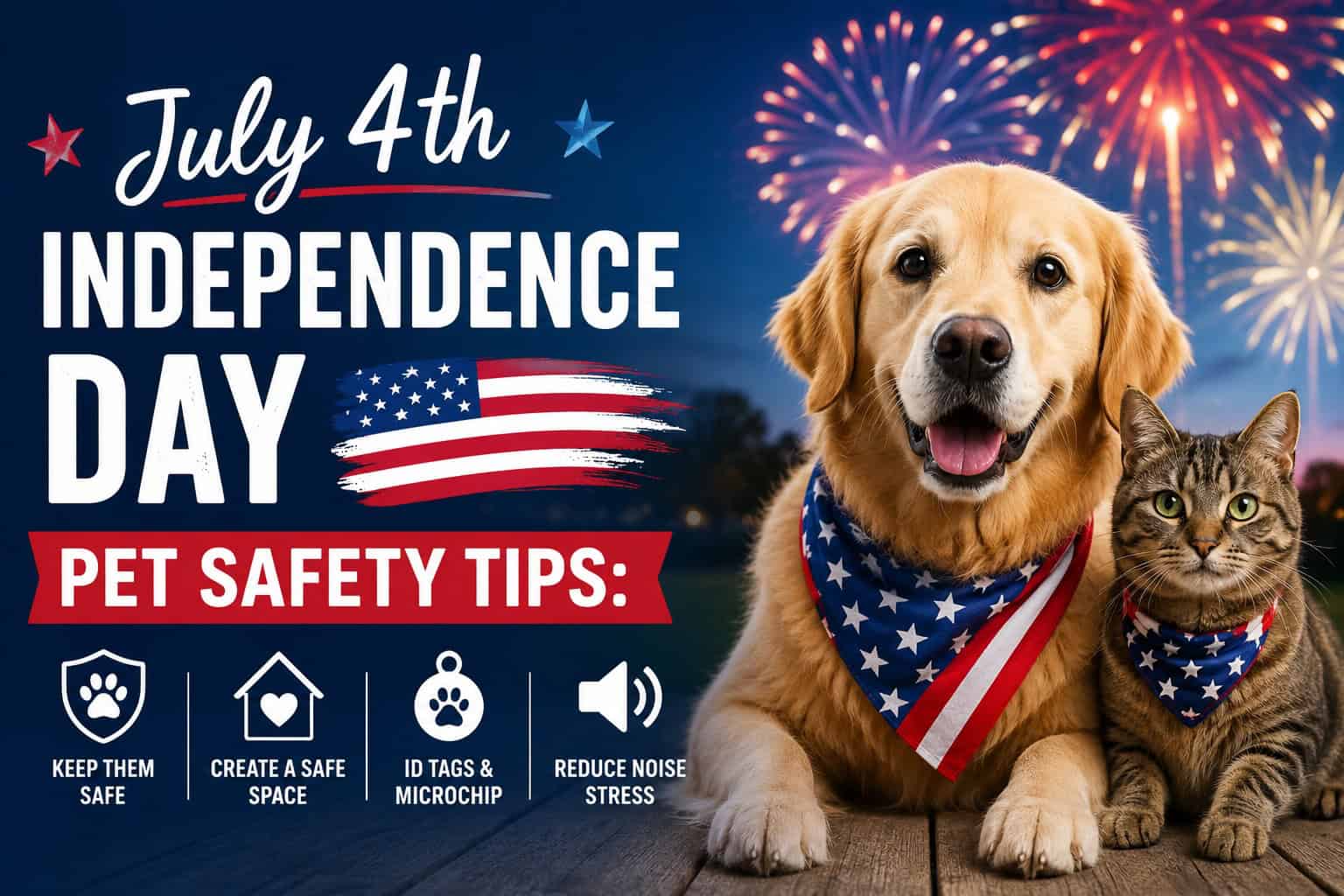
4th of July is one of America’s most beloved holidays, bringing together families and friends for backyard barbecues, picnics, fireworks, neighborhood celebrations, and outdoor adventures. While Independence Day is filled with fun and excitement for people, it can be one of the most stressful and dangerous days of the year for pets. Every year, veterinary hospitals and animal shelters across the country report a significant increase in lost pets, anxiety-related emergencies, burns, gastrointestinal illnesses, and accidental poisonings during the4th of July holiday.
Dogs and cats experience the world very differently than we do. Their hearing is far more sensitive, unfamiliar visitors can create stress, and tempting holiday foods often pose serious health risks. Fortunately, with a little planning and preparation, you can dramatically reduce the chances of your pet experiencing an emergency.
At Chagrin Falls Veterinary Center & Pet Clinic, Dr. Carol Osborne has spent decades helping pet owners keep their furry family members healthy, safe, and comfortable during holidays and other stressful events. Learn more About Dr. Carol and discover how proactive veterinary care can help your dog or cat enjoy every season safely.
Keep Pets Indoors Before Fireworks Begin
Fireworks may be beautiful to watch, but for dogs and cats they can be frightening and overwhelming. Loud explosions, bright flashes, unusual smells, and vibrations can trigger intense fear and panic. Even pets that have never shown signs of anxiety before may suddenly attempt to escape, hide, or injure themselves while trying to flee.
Bring your pets indoors well before sunset, long before neighborhood fireworks begin. Closing windows, curtains, and blinds can reduce both the noise and flashes of light. Turn on a television, calming music, or white noise to help mask outdoor sounds. Many pets feel more secure when they have access to their favorite bed, blanket, toys, or crate in a quiet room away from guests and windows.
Never leave your dog unattended in the backyard during fireworks. A frightened dog may jump fences, dig under gates, chew through barriers, or break tie-outs in an attempt to escape. Indoor cats may also bolt through open doors if startled, making preparation especially important.
Create a Comfortable Safe Space
Designating a quiet room specifically for your pet can significantly reduce stress during Independence Day celebrations. Choose a room away from the main activity where your pet can relax without constant interruptions from guests or loud noises.
Include:
- A comfortable bed or blanket
- Fresh drinking water
- Favorite toys or chew items
- A litter box for cats
- Soft background music or television
- Dim lighting if your pet prefers a darker environment
If your pet chooses to hide under furniture or inside a closet, allow them to remain there unless they appear injured or distressed. Hiding is a normal coping behavior that helps many anxious pets feel secure.
4th of July – Make Sure Identification is Current
4th of July consistently ranks among the busiest days of the year for lost pets. Startled animals often run considerable distances before stopping, making identification critical for a safe reunion.
Before the holiday, confirm that:
- Your pet wears a properly fitted collar.
- ID tags include your current phone number.
- Your pet’s microchip registration is up to date.
- You have a recent photograph of your pet.
A microchip dramatically increases the likelihood that your pet will be returned safely if they become lost. However, a microchip is only effective when the registration information is accurate.
4th of July – Protect Pets from Dangerous Holiday Foods
Backyard cookouts are full of delicious aromas that attract curious pets. Unfortunately, many common 4th of July foods can lead to digestive upset or even life-threatening medical emergencies.
Foods to keep away from pets include:
- Chocolate desserts
- Alcoholic beverages
- Onions and garlic
- Grapes and raisins
- Macadamia nuts
- Xylitol-containing desserts or sugar-free gum
- Fatty meats and greasy leftovers
- Cooked bones that splinter easily
- Corn cobs and wooden skewers
Cooked bones may splinter and become lodged in the digestive tract, while fatty foods can trigger painful pancreatitis. Corn cobs are especially dangerous because they commonly cause intestinal blockages requiring emergency surgery.
Encourage guests not to feed your pet table scraps, no matter how much begging they receive. Instead, provide your pet with their normal balanced diet and plenty of fresh water throughout the day.
4th of July – Keep Fireworks Away from Pets
Fireworks should never be handled around pets, whether they are lit or unlit. Sparklers burn at extremely high temperatures and can cause severe burns. Fireworks contain chemicals that may be toxic if chewed or swallowed, while discarded firework debris can remain hot long after the display ends.
After neighborhood celebrations are over, inspect your yard before allowing pets outside. Remove any leftover fireworks, broken sparklers, or debris that could attract curious dogs or cats.
4th of July – Watch Out for Heat and Dehydration
Many 4th of July celebrations occur during some of the hottest days of summer. Heat exhaustion and heat stroke can develop rapidly, especially in brachycephalic breeds such as Bulldogs, Pugs, Boston Terriers, Persian cats, and other flat-faced breeds.
Provide constant access to clean, cool drinking water and plenty of shade whenever pets spend time outdoors. Avoid strenuous exercise during the hottest part of the day and walk dogs early in the morning or later in the evening when temperatures are lower.
If your pet begins excessive panting, drooling, weakness, vomiting, or collapses, seek immediate veterinary attention.
4th of July – Manage Fireworks Anxiety Before It Starts
If your pet has shown signs of fear during previous holidays, don’t wait until fireworks begin to make a plan. Preventive care is much more effective than reacting once severe anxiety develops.
Many pets benefit from:
- Exercise earlier in the day to burn excess energy.
- Maintaining a normal feeding and walking schedule.
- Calming music or white noise.
- Pheromone diffusers or sprays.
- Anxiety wraps designed to provide gentle pressure.
- Veterinarian-approved calming supplements.
- Prescription medications for severe noise phobias.
Our Veterinary Sevices include individualized recommendations for pets that experience anxiety, allowing you to develop a plan well before future holidays.
4th of July – Travel Safely with Pets
If your holiday plans include travel, always transport pets safely inside secure carriers or properly fitted seatbelt harnesses. Never allow pets to ride loose in the vehicle or in the bed of a pickup truck.
Bring familiar bedding, food, medications, water, and identification whenever traveling. If you’re visiting friends or family, ask in advance whether the environment is suitable for your pet, particularly if fireworks will be nearby.
4th of July – Protect Cats from Holiday Stress
Cats often respond to loud noises differently than dogs. Rather than barking or pacing, they frequently hide in closets, under beds, inside cabinets, or attempt to escape outdoors.
Create a quiet sanctuary for your cat before guests arrive. Provide food, water, litter box access, scratching posts, and comfortable bedding in a closed room where visitors cannot accidentally leave doors open.
Never force a frightened cat to come out of hiding. Allow them to emerge when they feel safe.
4th of July – Support Your Pet’s Overall Wellness
Healthy pets often recover from stressful situations more quickly than those dealing with chronic illness or nutritional deficiencies. High-quality nutrition, routine veterinary care, and appropriate supplementation all contribute to overall health and resilience.
If you’re interested in veterinarian-formulated wellness products designed to support your pet’s long-term health, visit our Onlne Veterinary Supplement Store, where you’ll find premium supplements selected by Dr. Carol Osborne.
Know When to Contact Your Veterinarian
If your pet experiences persistent vomiting, diarrhea, difficulty breathing, severe anxiety, burns, injuries, seizures, collapse, or consumes fireworks, chocolate, alcohol, xylitol, corn cobs, or other toxic substances, seek veterinary care immediately. Prompt treatment often leads to better outcomes.
If you have questions before the holiday arrives, don’t hesitate to Contact our veterinary Clinic. Our experienced team is happy to answer your questions and help you prepare for a safe Independence Day. You can also learn more about our comprehensive Veterinary Sevices or read more About Dr. Carol and her integrative approach to pet health.
Celebrate Independence Day Safely with Your Pets
With thoughtful preparation, the 4th of July can be enjoyable for every member of your family—including your four-legged companions. By keeping pets indoors during fireworks, updating identification, preventing access to dangerous foods, managing anxiety proactively, and knowing when to seek veterinary care, you’ll greatly reduce the risk of emergencies and help your dog or cat stay calm, healthy, and safe throughout the holiday.
Schedule Your Pet’s 4th of July Wellness Visit Today
Whether your pet struggles with fireworks anxiety, needs a wellness examination before holiday travel, or could benefit from personalized recommendations for calming strategies and nutritional support, the caring team at Chagrin Falls Veterinary Center & Pet Clinic is here to help. Schedule an appointment today and give your pet the expert care they deserve before the celebrations begin.
Schedule an Appointment Online
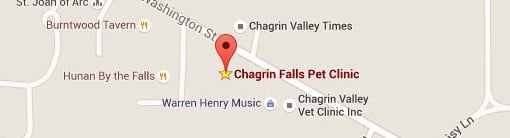
Chagrin Falls Veterinary Center & Pet Clinic530 E. Washington St.
Chagrin Falls, Ohio 44022