


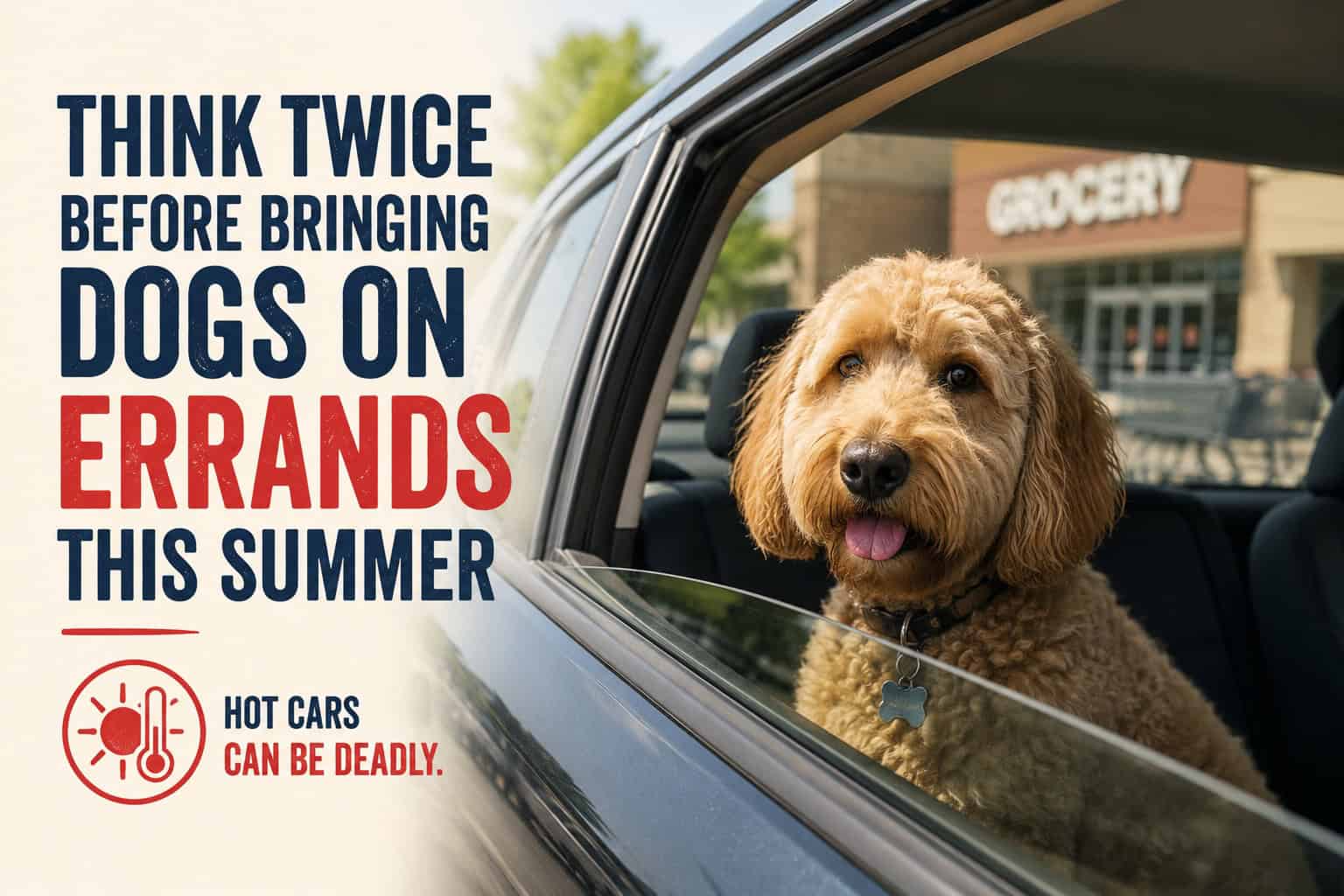
CLEVELAND, Ohio — Taking a dog along for a quick trip to the grocery store or pharmacy may seem harmless, but veterinarians say those short errands can become deadly during Northeast Ohio’s summer heat.
With temperatures climbing into the 90s, local animal experts are reminding pet owners that the safest place for most dogs on hot days is at home — not waiting in a parked vehicle while their owner runs inside.
Dr. Carol Osborne, founder of the Chagrin Falls Veterinary Center & Pet Clinic, said pet owners should avoid leaving dogs in parked vehicles altogether during summer.
Pets in Cars in Summer can be Deadly
“First of all, in my opinion, as a veterinarian with quite a bit of experience, you should never leave a dog in a parked car if you’re shopping or running errands,” Osborne said.
“The best place for your dog to be is at home, where he or she is not only safe, but comfortable.”
Osborne said many pet owners underestimate how quickly a parked vehicle heats up during the summer.
“It only takes 5 or 10 minutes before the temperature inside your car can exceed 100 degrees,” she said. “That’s even if you crack the window.”
Dogs are especially vulnerable because, unlike people, they cannot cool themselves by sweating.
Instead, they rely almost entirely on panting to regulate their body temperature.
Flat-faced breeds — including French bulldogs, pugs, bulldogs, boxers and shih tzus — face an even greater risk because their shortened airways make panting less effective.
Osborne said pet owners should watch for the early warning signs of heatstroke before a dog’s condition becomes life-threatening.
“Their mouth is open, and they’re panting or breathing quickly,” she said.
“You probably see their tongue, they might be drooling with saliva. Their gums and their tongue start to get a very bright red.
“Most pets would become restless, agitated, weak. If they’re walking, for example, outside, they can stumble, become confused.”
Without prompt treatment, heatstroke can progress to vomiting, collapse, seizures, organ failure and death.
If a dog appears to be overheated, Osborne recommends moving it to a cool area immediately, using cool — not ice-cold — water to lower its body temperature, offering small amounts of water if the animal is alert, and seeking emergency veterinary care as quickly as possible.
She cautioned owners against using ice baths or forcing water into a dog’s mouth.
The Cleveland Animal Protective League is also urging pet owners to take extra precautions whenever pets spend time outdoors this summer.
The organization recommends providing fresh water and shade, limiting walks to the early morning or evening and testing pavement with the palm of a hand before heading outside.
If the pavement is too hot to comfortably touch for several seconds, it is too hot for a dog’s paws.
Osborne said summer outings near pools, lakes and other bodies of water also require close supervision.
“If you are at a water park or a swimming pool or at the lake, never ever leave your pet unattended, not even for a minute,” she said.
“Pets are like kids — you have to keep an eye on them all the time.
“And if your pet is swimming, you know, if you got labs or retrievers or dogs that love to swim, remember that they have to have a rest period, just like a young child, so that they don’t get overtired.”
Animal welfare advocates also remind owners that leaving a pet in a parked vehicle can carry legal consequences in addition to medical risks.
Ohio law protects people from civil liability when they follow the required legal steps before entering a locked vehicle to rescue an animal believed to be in imminent danger from heat-related injury or death.
In Cuyahoga County, suspected cases can also be reported to the Cleveland APL’s Humane Investigations Hotline.
While hot weather poses the greatest threat during the summer months, the Fourth of July holiday presents another challenge for pets.
The Cleveland APL recommends keeping pets indoors during fireworks displays, as loud noises can cause animals to panic and run away.
The organization also encourages owners to make sure collars, identification tags and microchip information are current before holiday celebrations.
Sharon Harvey, president and CEO of the Cleveland APL, said a little preparation can help prevent emergencies.
“The Fourth of July should be a fun holiday for the whole family, including our pets,” Harvey said.
“A little preparation can prevent tragedy. By keeping pets cool in sheltered areas with access to lots of water, safely indoors during fireworks and ensuring their identification is current, we can help make sure they stay safe and at home where they belong.”
For Osborne, the advice is simple: If there’s any doubt about whether it’s safe to leave a dog in the car, leave the dog at home instead.
“It’s the safest place for them,” she said