


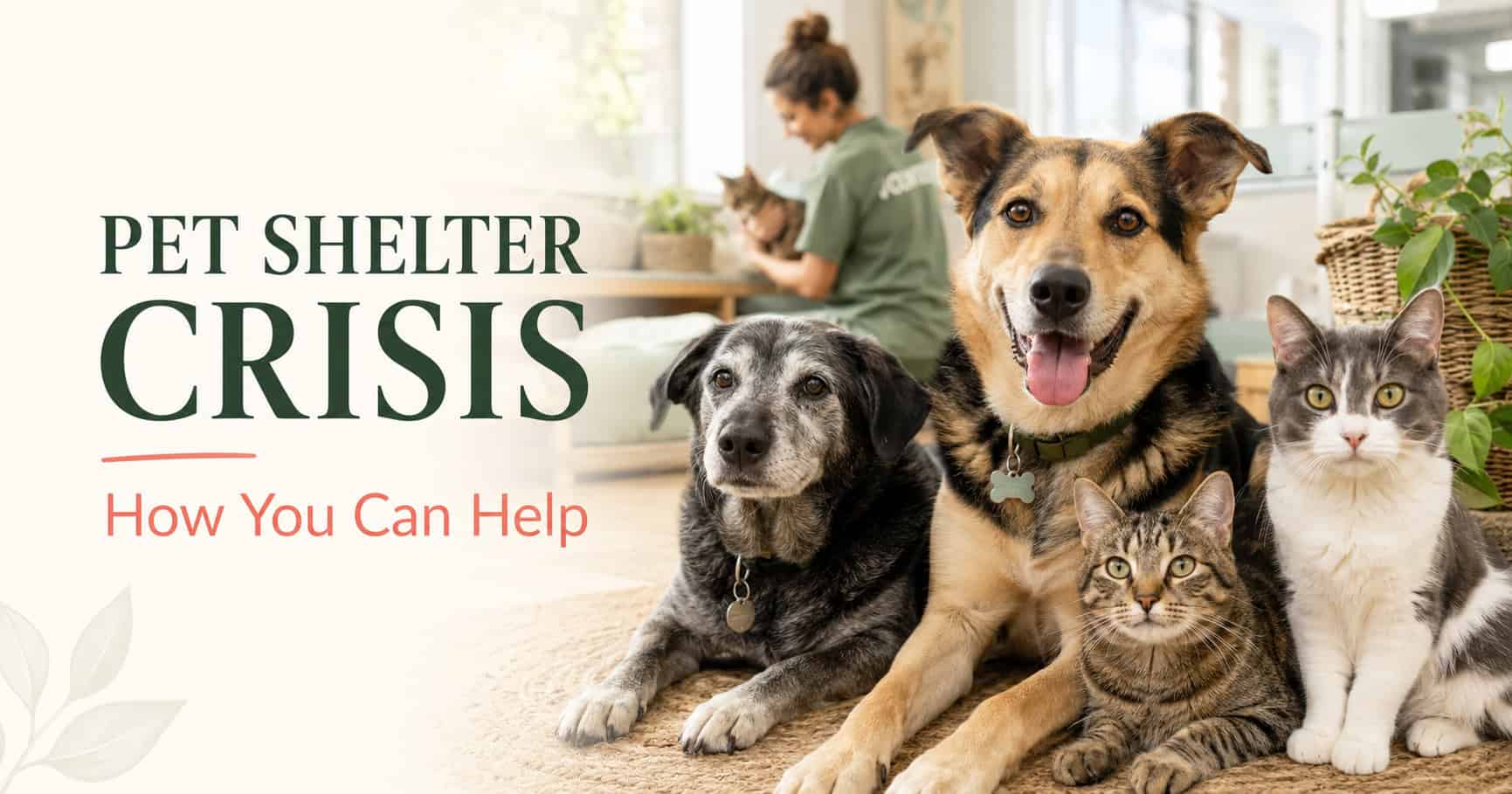
Animal shelters and rescue organizations across the country—including those in our local community—are facing a serious capacity crisis. More pets are entering animal shelters, many are waiting longer to find homes, and rescue teams are working with limited space, staffing, and resources.
Dr. Carol Osborne, DVM, integrative veterinarian and pet health advocate, explains some of the key factors contributing to shelter overcrowding—and the practical steps each of us can take to make a meaningful difference.
Why Are Animal Shelters Overcrowded?
The current pet shelter crisis is being driven by a combination of economic, social, and operational challenges.
Housing and Financial Pressures for Animal Shelters
Rising living costs, inflation, and restrictive rental policies are placing many pet owners under tremendous pressure. Breed restrictions, weight limits, and additional pet fees can make it difficult for families to find affordable, pet-friendly housing.
Sadly, some families are being forced to surrender pets they deeply love simply because they can no longer afford their care or find housing that will accept them.
Longer Shelter Stays
Adoption rates have slowed, which means many animals are remaining in animal shelters for longer periods. Medium-to-large dogs, senior pets, and animals with medical or behavioral needs can be especially difficult to place.
Longer stays increase stress for pets while also limiting the number of additional animals a shelter can safely accept.
Limited Care Resources
Many communities are experiencing shortages of veterinarians, shelter employees, volunteers, and affordable spay-and-neuter services. These challenges make it harder for animal shelters to provide timely care and can contribute to continued pet overpopulation.
How You Can Help Relieve the Pet Shelter Crisis
You do not have to adopt multiple animals to make a difference. Small, practical actions can help keep pets safe, support struggling families, reduce pressure on animal shelters, and save lives.
1. Keep Your Pets Safe and Healthy
Spay or Neuter Your Pets
Preventing unintended litters is one of the most effective ways to reduce pet overpopulation. Speak with your veterinarian about the appropriate time to spay or neuter your dog or cat based on their age, breed, size, and overall health.
Microchip Your Pet and Update Their Identification
Make sure your pet wears an identification tag with your current phone number. If your pet is microchipped, check the registry regularly to confirm that your contact information is correct.
A microchip can only help reunite you with your pet when the information connected to it is accurate and up to date.
Prioritize Training and Socialization
Early socialization and positive-reinforcement training can help prevent behavioral difficulties that may lead to pet surrender.
If you are struggling with your pet’s behavior, ask your veterinarian or a qualified trainer for guidance before the problem becomes overwhelming. Many common behavioral concerns can be successfully managed with the right support.
2. Open Your Home—even Temporarily
Consider Fostering a Pet
Fostering gives a shelter animal a safe, temporary home while freeing valuable space for another pet in need.
A foster home can also reduce an animal’s stress and help rescue teams understand how the pet behaves in a home environment. This information can make it easier to find the right permanent family.
Even fostering for a few days or weeks can make a meaningful difference.
Adopt When You Are Ready
When the time is right to welcome a new pet into your family, consider adopting from a local shelter or rescue organization.
Try to keep an open mind about senior pets, larger dogs, and animals with manageable medical needs. These wonderful pets are often overlooked and may spend considerably longer waiting for homes.
Adoption should always be a thoughtful, long-term commitment. Choose a pet whose personality, activity level, care requirements, and size are a good match for your household and lifestyle.
3. Support Local Animal Shelters and Pet Owners
Volunteer Your Time
Animal shelters need many different kinds of help. Depending on the organization, volunteers may assist with:
- Walking and socializing dogs
- Providing enrichment for cats
- Transporting animals
- Photographing adoptable pets
- Helping at adoption events
- Completing administrative work
- Washing bedding and organizing supplies
Contact your local shelter directly to learn where help is needed most.
Donate Supplies or Funds
Food, bedding, cleaning supplies, toys, carriers, and medical care funds are always valuable. Before purchasing supplies, check the shelter’s website or wish list so your donation meets its current needs.
Even a small financial contribution can help provide vaccinations, veterinary treatment, medication, food, or emergency care.
Help Pets Remain With Their Families
Keeping pets with the families who already love them is one of the most effective ways to reduce shelter intake.
Share information about local pet food pantries, affordable veterinary services, low-cost spay-and-neuter programs, training resources, and temporary emergency fostering. A bag of pet food, a ride to a veterinary appointment, or a few days of temporary care may prevent a beloved pet from entering a shelter.
Every Action Can Make a Difference
The pet shelter crisis cannot be solved by animal shelters and rescue organizations alone. It requires compassionate action from pet owners, veterinary professionals, community organizations, landlords, and neighbors.
Whether you adopt, foster, volunteer, donate, microchip your pet, or help a struggling neighbor access pet-care resources, your actions matter. Together, we can reduce shelter overcrowding and create a safer, healthier community for pets and the people who love them.
Dr. Carol and Chagrin Falls Pet Clinic Are Here to Help
Whether you are adopting, fostering, or caring for a pet with medical needs, Dr. Carol Osborne and the Chagrin Falls Pet Clinic team are here to provide compassionate, personalized veterinary guidance.
Chagrin Falls Pet Clinic: Caring for your pets and supporting our community.
Call us: 440-247-5901
Visit: www.chagrinfallspetclinic.com or, for pet supplies, visit https://www.drcarol.com