
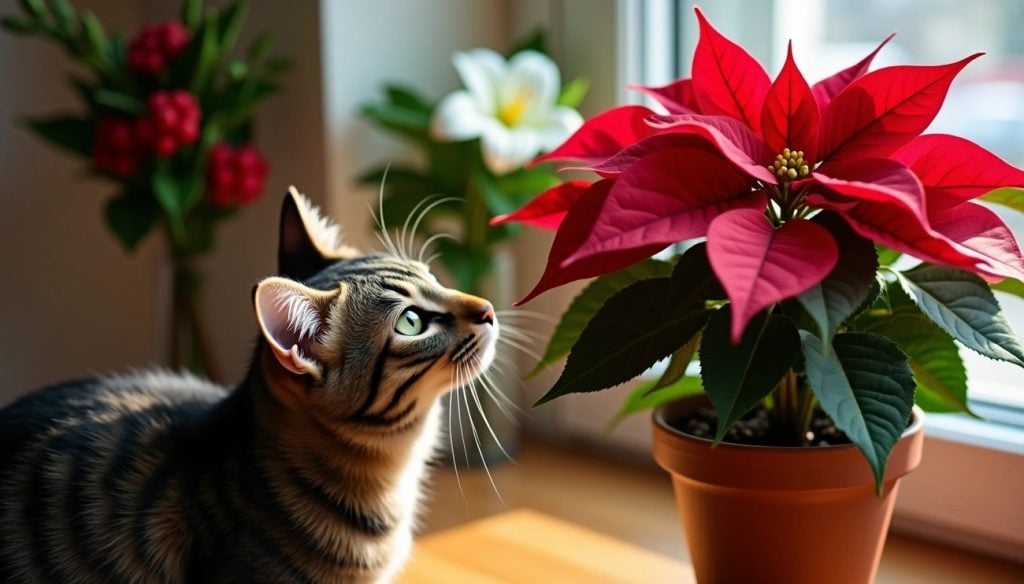
Holiday seasons bring renewed concern about poinsettia and cats, with pet owners frequently removing these traditional plants from their homes based on widespread safety warnings. After decades of cautions surrounding these bright red holiday decorations, the question remains whether poinsettias present the lethal threat commonly believed.
Poinsettias appear on the ASPCA® list of toxic plants and carry official classification as poisonous to cats [8]. The actual risk proves considerably lower than public perception suggests. The Pet Poison Helpline® categorizes these plants as only mildly toxic to cats and dogs [8]. Dr. Carol Osborne, DVM, addresses this misconception directly: “Around Christmas time, we see all these warnings on the internet about poinsettias. Well, poinsettias never killed anybody” [9].
The reality of poinsettia toxicity exists between absolute safety and dangerous threat. These plants may cause drooling or gastrointestinal discomfort in cats, though fatal reactions remain rare [6]. Pet owners should recognize that other holiday plants present significantly greater dangers. Mistletoe berries are super toxic and can trigger cardiac complications and death in pets [6].
This examination separates established facts from persistent myths about poinsettia toxicity in cats. We’ll explore the actual symptoms that occur when cats consume these holiday plants and identify which seasonal decorations warrant genuine concern from pet owners.
Are poinsettias poisonous to cats?
Poinsettias maintain their notorious reputation as deadly plants for felines despite scientific evidence suggesting otherwise. Research presents a markedly different perspective on actual poinsettia toxicity in cats.
Why poinsettias are labeled as toxic
Poinsettias produce a milky white sap within their leaves and stems containing diterpenoid euphorbol esters and saponin-like detergents [6]. These chemical compounds—bearing similarity to substances found in household cleaners [6]—primarily establish poinsettias’ position on toxic plant classifications. The sap produces irritation when ingested or upon contact with feline skin [6]. However, actual toxicity levels remain substantially lower than widespread pet owner concerns suggest.
What the ASPCA and vets actually say
The ASPCA provides official classification of poinsettias (Euphorbia pulcherrima) as toxic to cats, dogs, and horses [7]. Significantly, the organization describes these plants as “generally over-rated in toxicity” [7]. Veterinary professionals support this assessment consistently. Shari DePauw, DVM, states: “Overall, poinsettias are generally quite safe” [2]. Veterinary toxicologists classify poinsettias as only mildly toxic to cats [6]. Poinsettias have acquired negative publicity when scientific evidence demonstrates minimal actual toxicity to pets [8].
Common myths vs. real risks
Poinsettia toxicity concerns trace back to an unverified 1919 rumor regarding a child’s death in Hawaii following consumption of wild poinsettia leaves—a claim lacking documented evidence [4]. Scientific research reveals cats require consumption of substantial poinsettia quantities to develop serious illness [5]. Ohio State University research from the 1970s determined a 50-pound child would need to consume approximately 500 leaves to achieve dangerous toxicity levels [4].
Legitimate poinsettia risks involve mild symptoms:
- Mouth and stomach irritation
- Drooling
- Occasional vomiting or diarrhea
- Skin irritation when sap contacts fur or skin
Poinsettias and cats represent a less than ideal pairing, yet these plants hardly merit their lethal reputation [2].
Symptoms of poinsettia poisoning in cats
Cats that consume poinsettia plant material typically exhibit mild clinical signs. Most reactions remain limited in scope and duration. Understanding symptom presentation enables appropriate response and care decisions.
Mild symptoms to watch for
The milky sap in poinsettias contains irritants that may produce observable clinical symptoms:
- Drooling or excessive lip licking
- Vomiting (most frequently observed symptom)
- Diarrhea (occurs less commonly)
- Skin irritation with redness, swelling, and itchiness
- Oral irritation or discomfort [6]
Sap contact with feline skin may result in localized irritation and itchiness. Eye contact with the plant sap can produce inflammation or conjunctivitis [2].
When symptoms become serious
Severe reactions to poinsettia plants occur infrequently. Veterinary care becomes necessary when:
- Vomiting continues beyond 24 hours
- Cats display unusual lethargy or instability
- Respiratory difficulties develop
- Clinical signs worsen rather than improve [7]
Dehydration may develop from persistent gastrointestinal upset, requiring medical intervention [8]. Cats refusing food due to oral discomfort face additional complications. Some veterinarians classify inappetent cats as medical emergencies [9].
How long symptoms typically last
Poinsettia exposure symptoms are characteristically self-limiting and temporary [6]. Most clinical reactions resolve within 12-24 hours without medical treatment [8].
Affected cats benefit from quiet rest periods while processing the plant irritants. Fresh water availability supports hydration during recovery [8].
Home care proves adequate for mild cases showing improvement. Cats experiencing vomiting may require temporary food and water restriction for several hours, followed by gradual reintroduction of fluids and bland food [10]. Skin irritation from sap contact typically resolves independently, though gentle washing with soap and water provides relief [10].
Other holiday plants more dangerous than poinsettias


Image Source: Facebook
Poinsettias pale in comparison to other festive plants that present genuine threats to feline health. Several holiday decorations deserve immediate attention from pet owners concerned about their cats’ safety.
Mistletoe and its severe effects
The traditional kissing plant harbors serious dangers for cats. American mistletoe contains toxic compounds including phoratoxin and lectins [11]. Small quantities trigger vomiting, diarrhea, and abdominal pain [12]. Severe mistletoe poisoning produces:
- Decreased blood pressure and heart rate
- Breathing difficulties
- Hallucinations
- Seizures [13]
Mistletoe requires complete removal from homes with cats—dried varieties maintain their toxic properties [13].
Lilies and kidney failure in cats
True lilies represent the most lethal holiday plants for felines. A single bite from Easter, Tiger, Asiatic, or Stargazer lily varieties causes irreversible kidney failure [1]. Cats face poisoning through:
- Drinking water from lily-containing vases
- Licking pollen from their fur
- Chewing any leaf or petal portion [1]
Kidney failure develops within 24-72 hours following ingestion [1]. Unlike poinsettias, lily toxicity frequently proves fatal without immediate medical intervention [14].
Holly, amaryllis, and Christmas rose
Holly berries and leaves contain saponins that produce severe gastrointestinal distress [15]. Symptoms extend beyond vomiting and diarrhea to include drooling, abdominal pain, and lethargy [5].
Amaryllis bulbs concentrate lycorine, a compound causing vomiting, tremors, and blood pressure drops [15]. Ingestion results in vomiting, tremors, and decreased blood pressure [5].
Christmas rose (Helleborus niger) produces bloody diarrhea, excessive drooling, and contains cardiac glycosides that disrupt heart rhythm—potentially fatally [16].
These plants demand vigilance during holiday decorating, particularly when poinsettias cause only mild, temporary discomfort.
What to do if your cat eats a poinsettia
Cat owners discovering their pet has consumed poinsettia should respond calmly and systematically. Poinsettias are mildly toxic, and most cats recover completely with appropriate supportive care.
First steps to take at home
Remove the plant immediately from your cat’s access to prevent additional ingestion [7]. Check your cat’s breathing and general behavior for normalcy [17]. Remove any visible plant material from your cat’s mouth if still present [8]. Rinse the mouth gently with water if your cat tolerates the procedure [8]. Cats with sap contact on fur or skin require bathing of the affected area with soap and water to prevent continued irritation [3].
Cat food offered in small amounts can help absorb and dilute the irritating sap [2]. Cats already vomiting should have food withheld temporarily while fresh water remains available [18].
When to call the vet or poison control
Poinsettia ingestions typically resolve without veterinary intervention. Professional consultation becomes necessary when:
- Vomiting continues beyond 24 hours [7]
- Your cat shows unusual lethargy or unsteadiness [7]
- Multiple vomiting episodes occur within several hours [8]
- Repeated diarrhea develops [8]
Younger cats, smaller animals, or those with pre-existing health conditions may require closer monitoring for more pronounced reactions to poinsettia consumption [8].
Why inducing vomiting isn’t always safe
Pet owners should never attempt induced vomiting without veterinary guidance [17]. Irritating substances like poinsettia sap can damage the esophagus during both ingestion and forced expulsion, potentially doubling the tissue trauma.
Emergency contact numbers to keep handy
Essential emergency resources for plant ingestion incidents include:
- Pet Poison Helpline: 855-764-7661 (consultation fee applies) [8]
- ASPCA Animal Poison Control: 888-426-4435 (consultation fee may apply) [19]
- Your regular veterinarian’s contact information
- Nearest emergency veterinary clinic location
No specific antidote exists for poinsettia exposure [6], though prompt and appropriate response supports comfortable recovery for affected cats.
Conclusion
Decades of holiday warnings have created widespread misconceptions about poinsettias and feline safety. These traditional holiday plants, though officially classified as toxic, present minimal danger to cats compared to other seasonal decorations. Cats consuming poinsettia leaves typically experience brief discomfort rather than life-threatening complications.
The scientific evidence reveals that cats require enormous quantities of poinsettia consumption to develop serious health effects. Symptoms such as drooling, mild vomiting, or skin irritation generally resolve naturally within 24 hours without professional intervention. Pet owners must maintain observation of cats following any plant ingestion, especially young cats or those with compromised health conditions.
Holiday plant dangers exist primarily with lilies, mistletoe, holly, and amaryllis rather than poinsettias. Lilies can cause fatal kidney failure in cats from minimal exposure. Mistletoe berries trigger cardiovascular complications, while holly and amaryllis produce severe digestive distress. These plants warrant genuine caution during seasonal decorating.
The enduring poinsettia myth illustrates how misinformation persists despite scientific clarification. Holiday decorating decisions need not eliminate these plants completely. Strategic placement in elevated locations or rooms with limited pet access provides reasonable balance between festive atmosphere and animal safety.
Dr. Carol Osborne believes that supporting pet health requires accurate information about genuine versus perceived threats. This knowledge empowers pet owners to create safer holiday environments while maintaining traditional seasonal celebrations. Understanding real plant dangers allows families and their cats to experience more peaceful holiday seasons together.
Key Takeaways
Despite their toxic reputation, poinsettias are only mildly harmful to cats and rarely cause serious health issues.
• Poinsettias cause mild symptoms like drooling and vomiting that typically resolve within 24 hours without treatment
• A cat would need to eat approximately 500 leaves to reach dangerous toxicity levels, making severe poisoning unlikely
• Lilies, mistletoe, and holly pose far greater threats than poinsettias and can cause kidney failure or heart problems
• If your cat eats poinsettia, remove plant material, rinse their mouth, and monitor for persistent vomiting or lethargy
• The deadly poinsettia myth stems from an unverified 1919 story with no documented evidence
The century-old fear surrounding poinsettias has been greatly exaggerated. While these plants aren’t completely harmless, they’re far less dangerous than other common holiday decorations. Focus your attention on truly toxic plants like lilies and mistletoe, which can cause fatal reactions even from minimal exposure.
FAQs
Q1. Are poinsettias deadly for cats? No, poinsettias are not deadly for cats. While they are classified as mildly toxic, a cat would need to consume a large amount of the plant to experience severe effects. Most cases of ingestion result in only mild, temporary discomfort.
Q2. What symptoms might a cat show after eating a poinsettia? If a cat eats a poinsettia, it may experience mild symptoms such as drooling, vomiting, or diarrhea. Skin irritation can occur if the sap contacts the cat’s fur or skin. These symptoms typically resolve within 24 hours without medical intervention.
Q3. Which holiday plants are more dangerous than poinsettias for cats? Several holiday plants pose greater risks than poinsettias. Lilies are extremely toxic and can cause fatal kidney failure in cats. Mistletoe can lead to severe cardiovascular problems, while holly and amaryllis can cause serious gastrointestinal distress.
Q4. What should I do if my cat eats a poinsettia? If your cat eats a poinsettia, remove any remaining plant material from their mouth and rinse it with water. Monitor your cat for persistent vomiting or unusual lethargy. In most cases, symptoms will resolve on their own, but contact a vet if they persist for more than 24 hours.
Q5. How can I keep my cat safe around holiday plants? To keep your cat safe, avoid bringing highly toxic plants like lilies into your home. For mildly toxic plants like poinsettias, consider placing them in elevated locations or rooms where your cat spends less time. Always supervise your pet around new plants and contact a vet if you suspect ingestion of any toxic substance.
References
[1] – https://www.chagrinfallspetclinic.com/2024/11/20/are-poinsettias-poisonous-to-cats-and-dogs-and-if-your-pet-eats-the-toxic-plant-what-should-you-do/
[2] – https://www.chagrinfallspetclinic.com/2022/11/20/the-christmas-decor-item-you-should-avoid-if-you-have-a-pet/
[3] – https://www.chagrinfallspetclinic.com/2024/11/19/popular-christmas-decorations-could-be-kiss-of-death-for-your-pets-according-to-vets/
[4] – https://www.petpoisonhelpline.com/poison/poinsettia/
[5] – https://www.purina.com/articles/cat/health/routine-care/are-poinsettias-toxic-to-cats
[6] – https://www.aspca.org/pet-care/aspca-poison-control/toxic-and-non-toxic-plants/poinsettia
[7] – https://www.thesprucepets.com/are-poinsettias-poisonous-to-cats-8753094
[8] – https://ag.purdue.edu/department/btny/ppdl/potw-dept-folder/2021/poinsettia-poisonous-pets.html
[9] – https://mother-nature.ca/the-100-year-old-myth-poison-poinsettia-pets/
[10] – https://www.purina.com/articles/cat/health/routine-care/holiday-plants-poisonous-to-cats
[11] – https://www.chewy.com/education/cat/health-and-wellness/are-poinsettias-poisonous-to-cats
[12] – https://www.justanswer.com/cat-health/ie14u-cat-sick-not-feeling-good-poinsettia.html
[13] – https://www.petcarerx.com/article/are-poinsettias-poisonous-to-cats/1477?srsltid=AfmBOor-yIlgrvUs_s8u1q1SaSt-Cxs7k-18FDVuAJ6Qo-6pyOcO9tV_
[14] – https://www.aspca.org/pet-care/aspca-poison-control/toxic-and-non-toxic-plants/mistletoe-american
[15] – https://www.justanswer.com/pet-cat/0zl30-cat-ahold-mistletoe-i-m-not-sure.html
[16] – https://www.argospetinsurance.co.uk/we-talk-pet/why-mistletoe-and-holly-are-the-two-main-christmas-plants-poisonous-to-cats/
[17] – https://healthtopics.vetmed.ucdavis.edu/health-topics/feline/lily-toxicity-cats
[18] – https://pmc.ncbi.nlm.nih.gov/articles/PMC10822363/
[19] – https://todaysveterinarypractice.com/toxicology/hazardous-christmas-plants-pets/
[20] – https://www.petpoisonhelpline.com/pet-owner-blog/holiday-toxins/
[21] – https://www.petpoisonhelpline.com/
[22] – https://lortsmith.com/need-help-now/cat/poisons-toxins/toxic-plants/poinsettia/
[23] – https://www.metlifepetinsurance.com/blog/pet-health/my-cat-ate-a-poinsettia-leaf/
Dr. Carol Osborne, DVM
Dr. Carol Osborne, DVM, is a practicing integrative veterinarian and a nationally recognized leader, speaker, educator, and advocate in the field of functional medicine. She is the founder and director of the Chagrin Falls Veterinary Center and Pet Clinic and an Emmy-nominated television journalist. Her first two books, Naturally Healthy Dogs and Naturally Healthy Cats hit the international best-seller lists. She is a regular contributor to several television shows and networks including FOX & Friends, The Today Show, Discovery’s Animal Planet, and Good Day LA.Dr. Carol is board-certified in Anti-Aging Medicine and developed and patented PAAWS: Pet Anti-Aging Wellness System for dogs and cats. Today she has turned her passion for functional pet medicine, real food, nutrition, and wellness into activism. Dr. Osborne is leading a pet health revolution that challenges us to reimagine our pet’s biology and the process of aging to create and sustain your pet’s health for life. Learn more at http://www.chagrinfallspetclinic.com