
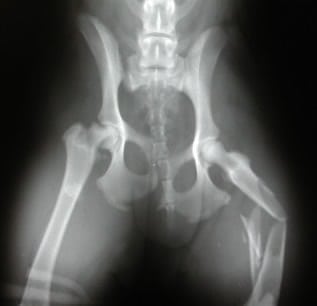
Pet Broken Bones. Although automobile accidents are the number one cause of broken bones in pets, surprisingly enough the second most common cause of fractures in pets is furniture in your home. Pets jump or fall from, for example, your couch or bed and break a bone. A recent survey of pet fractures sums up the most common ways, from which broken bones in pets result. In 2008, hit by cars topped the list, followed by accidents in which pets fell or jumped, primarily from everyday household furniture.
Top 10 Ways Pets Break Bones
- Hit by Car
- Jumping
- Falling
- Fighting With Other Pets or Animals
- Running and Slipping
- Being Hit or Struck With an Object
- Getting Caught in or Between an Object
- Running into Object
- Getting Stepped On
- Being Injured in a Car Accident
Last year, over 5,000 claims were turned into pet insurance companies for broken bones. The survey reported that 40 percent resulted from pets being hit by cars. Jumping and/or falling, from household furniture accounted for another 40 percent. These cases usually resulted from pets jumping and/or falling from couches and beds, and even from their owner’s laps. The final 20 percent included those in which pets ran into an stationary object, got into a fight with another pet or animal, were trapped in a tight space, or accidentally hit with various moving objects, other than cars.
What are the most common bones pet’s break?
The humerus, femur, radius, ulna and tibia were the top five bones broken in 2008.
What are the most common treatments submitted for Broken Bones?
Surgical repair with bone plates topped the list with an average cost of $1,500 dollars.
What are the most expensive fractures to surgically repair?
Fractures of the pelvis and/or vertebrae of the spinal cord (your pets back) topped the list at an average cost of $2600 dollars using bone plates. The same fractures repaired using pins, wires, or screws averaged $2400 dollars.
Broken bones hurt pets and are expensive for owners to repair. Surely an ounce of prevention is well worthwhile to try to eliminate potential problems. Take a close look inside your house and remove possible threats. Be sure that your pet has a safe, secure area in which to play outside your house as well. Don’t let your pet run loose. Get a pet safety belt when he’s traveling with you in the car and don’t let pets ride lose in the back of your pick-up truck. Keep your 4-legged companion on a leash when you’re going for walks and be sure his collar fits securely and his ID tags are up to date. For those that like to bolt out your front door and run into the road restrict their access with a baby gate or work with a behaviorist to “desensitize” your pet to open doors.