
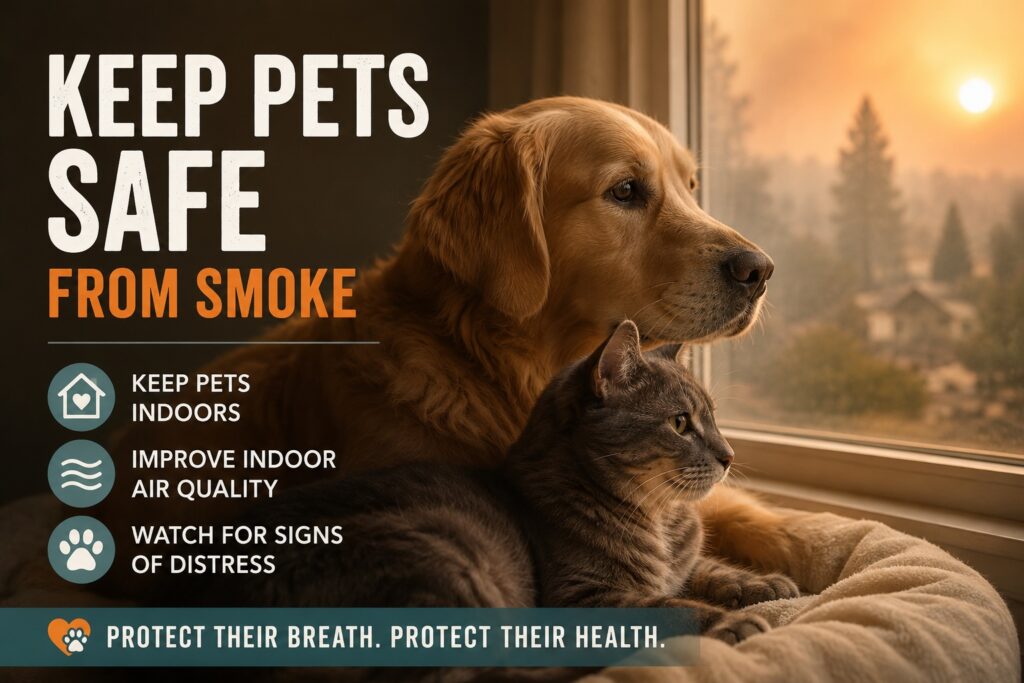
Smoke-filled skies aren’t just unpleasant—they can pose serious health risks for both people and pets. Whether the smoke comes from wildfires, nearby brush fires, industrial pollution, or heavy urban smog, the tiny particles and toxic gases carried in the air can irritate your pet’s respiratory system and worsen existing medical conditions.
While humans can often recognize when smoky conditions are affecting their breathing, pets cannot tell us when they are struggling. In many cases, dogs and cats may not cough or show obvious signs until their condition has become more serious.
Knowing how smoke affects pets, recognizing the warning signs, and taking simple preventive measures can help protect your furry family members during periods of poor air quality.
Why Smoke Is Dangerous for Pets
Smoke contains a mixture of harmful gases and microscopic particles that can penetrate deep into the lungs. Depending on the source, smoke may contain:
- Fine particulate matter (PM2.5)
- Carbon monoxide
- Carbon dioxide
- Nitrogen oxides
- Formaldehyde
- Acrolein
- Benzene
- Volatile organic compounds (VOCs)
- Ash and soot
These pollutants can irritate the eyes, nose, throat, and lungs while placing additional stress on the cardiovascular system.
Because pets spend much of their time close to the ground—where smoke particles often concentrate—they may inhale even higher levels of pollutants than people.
Which Pets Are Most at Risk?
Although any pet can be affected by poor air quality, certain animals are especially vulnerable.
Higher-risk pets include:
- Senior dogs and cats
- Puppies and kittens
- Flat-faced (brachycephalic) breeds
- Pets with asthma
- Animals with chronic bronchitis
- Pets with heart disease
- Dogs with collapsing trachea
- Pets recovering from respiratory infections
- Overweight animals
Brachycephalic breeds—including French Bulldogs, Bulldogs, Boston Terriers, Pugs, Shih Tzus, and Persian cats—already have narrowed airways, making breathing more difficult even under normal conditions.
Smoke exposure can rapidly worsen their breathing difficulties.
How Smoke Affects Your Pet’s Body
The tiny particles found in smoke are small enough to bypass the body’s normal defenses.
Once inhaled, these particles can:
- Irritate airways
- Trigger inflammation
- Reduce oxygen exchange
- Increase mucus production
- Worsen allergies
- Exacerbate asthma
- Stress the heart
In prolonged smoke events, repeated exposure may contribute to chronic respiratory disease and reduced lung function.
Signs Your Pet May Be Affected by Smoke
Not every pet will cough immediately. In fact, some of the earliest signs are subtle.
Watch for:
- Fatigue
- Lethargy
- Decreased appetite
- Sleeping more than usual
- Reduced interest in walks or play
- Mild eye irritation
- Runny nose
As smoke exposure worsens, more obvious symptoms may develop.
Respiratory Signs
- Coughing
- Wheezing
- Sneezing
- Rapid breathing
- Labored breathing
- Open-mouth breathing in cats
- Excessive panting
Serious Warning Signs
Seek veterinary care immediately if your pet develops:
- Bright red or bluish gums
- Open-mouth breathing that doesn’t stop
- Difficulty standing
- Collapse
- Weakness
- Disorientation
- Persistent coughing
- Respiratory distress
Cats rarely breathe with an open mouth. If they do, this should always be considered an emergency.
Flat-Faced Dogs Need Extra Protection
Dogs with short noses have much less reserve when air quality deteriorates.
Breeds at highest risk include:
- French Bulldogs
- Bulldogs
- Boston Terriers
- Pugs
- Boxers
- Shih Tzus
Because these dogs already struggle to cool themselves and move air efficiently, even moderate smoke levels may trigger breathing problems.
Owners should monitor these breeds especially closely during smoky conditions.
How to Protect Pets During Poor Air Quality
Fortunately, several simple precautions can significantly reduce your pet’s exposure.
Keep Pets Indoors
The safest place during smoky conditions is indoors.
Close windows and doors whenever possible to reduce smoke entering your home.
Use Air Conditioning
Running air conditioning helps filter indoor air while keeping pets cool.
If your HVAC system has high-efficiency filters (MERV 13 or higher), it can remove many airborne particles.
Portable HEPA air purifiers can also improve indoor air quality, especially in rooms where pets spend most of their time.
Limit Outdoor Activity
Avoid:
- Long walks
- Hiking
- Fetch sessions
- Running
- Dog parks
Instead, take dogs outside only briefly for bathroom breaks until air quality improves.
Exercise increases breathing rate, causing pets to inhale more pollutants.
Keep Fresh Water Available
Smoke exposure can dry the airways.
Encourage pets to drink fresh water throughout the day to help maintain hydration.
Should You Walk Your Dog During Smoke Events?
Check your local Air Quality Index (AQI) before taking your dog outside.
As a general guideline:
AQI 0–50: Safe for most pets.
AQI 51–100: Sensitive animals may need reduced activity.
AQI 101–150: Limit outdoor exercise.
AQI Above 150: Keep pets indoors whenever possible.
If the air smells smoky to you, assume your pet is also being affected.
What If Your Pet Has Asthma or Heart Disease?
Pets with pre-existing respiratory or cardiac disease require extra caution.
Follow your veterinarian’s recommendations regarding:
- Activity restrictions
- Medications
- Inhalers (if prescribed)
- Emergency plans
Never discontinue prescribed medications during smoke events without veterinary guidance.
Can Smoke Cause Long-Term Health Problems?
Most healthy pets recover fully after short-term exposure.
However, prolonged or repeated smoke exposure may contribute to:
- Chronic bronchitis
- Reduced lung function
- Persistent airway inflammation
- Increased respiratory sensitivity
Pets with existing medical conditions are more likely to experience lasting complications.
When Should You Call Your Veterinarian?
Contact your veterinarian promptly if your pet develops:
- Persistent coughing
- Difficulty breathing
- Rapid breathing
- Loss of appetite lasting more than 24 hours
- Lethargy that worsens
- Blue or bright red gums
- Open-mouth breathing
- Collapse
Never wait if your pet appears to be struggling for air.
Early treatment often prevents more serious complications.
Simple Ways to Improve Indoor Air Quality
You can further protect your pets by:
- Keeping windows closed
- Running HEPA air purifiers
- Changing HVAC filters regularly
- Avoiding candles and fireplaces
- Avoiding smoking indoors
- Vacuuming with HEPA-filter vacuums
- Wiping pets’ paws and coats after brief outdoor trips to remove ash and fine particles
These small steps help reduce ongoing exposure inside the home.
Final Thoughts
Poor air quality affects more than people—it can have significant health consequences for our pets as well.
Dogs and cats exposed to smoke may become tired, lose their appetite, or develop breathing problems long before owners recognize the danger.
Keeping pets indoors, limiting exercise, monitoring for signs of respiratory distress, and seeking veterinary care when needed are the best ways to protect them during smoky conditions.
If you’re ever uncertain whether your pet is struggling to breathe, don’t wait. Contact your veterinarian immediately. Prompt treatment can make all the difference.
Frequently Asked Questions
Can wildfire smoke make dogs sick?
Yes. Smoke can irritate the lungs and airways, leading to coughing, breathing difficulty, lethargy, eye irritation, and decreased appetite.
Is smoke harmful to cats?
Absolutely. Cats have sensitive respiratory systems and may develop breathing problems even before coughing becomes noticeable.
Should I walk my dog when the air quality is poor?
Limit walks when the AQI exceeds 100, and avoid outdoor exercise altogether when air quality becomes unhealthy.
How do I know if my pet is having trouble breathing?
Signs include rapid breathing, excessive panting, wheezing, open-mouth breathing, blue gums, coughing, or difficulty exercising.
Are French Bulldogs and Bulldogs more sensitive to smoke?
Yes. Flat-faced breeds have narrowed airways and are significantly more susceptible to respiratory distress during smoky conditions.
Can pets stay inside with the air conditioner running?
Yes. Air-conditioned homes with closed windows are generally the safest environment during smoke events.
Do air purifiers help pets?
HEPA air purifiers can reduce airborne smoke particles indoors and may improve comfort for both pets and people.
When should I call my veterinarian?
Immediately if your pet has difficulty breathing, collapses, develops blue gums, or experiences persistent coughing or severe lethargy.
References
American Veterinary Medical Association (AVMA). Wildfire Smoke and Animals. https://www.avma.org/resources-tools/animal-health-and-welfare/wildfire-smoke-and-animals
American Kennel Club (AKC). How Wildfire Smoke Affects Dogs. https://www.akc.org
U.S. Environmental Protection Agency (EPA). AirNow Air Quality Index. https://www.airnow.gov
Cornell University College of Veterinary Medicine. Respiratory Disease in Dogs and Cats. https://www.vet.cornell.edu
Merck Veterinary Manual. Respiratory Disorders in Small Animals. https://www.merckvetmanual.com
Centers for Disease Control and Prevention (CDC). Wildfire Smoke and Health. https://www.cdc.gov/air/wildfire-smoke