
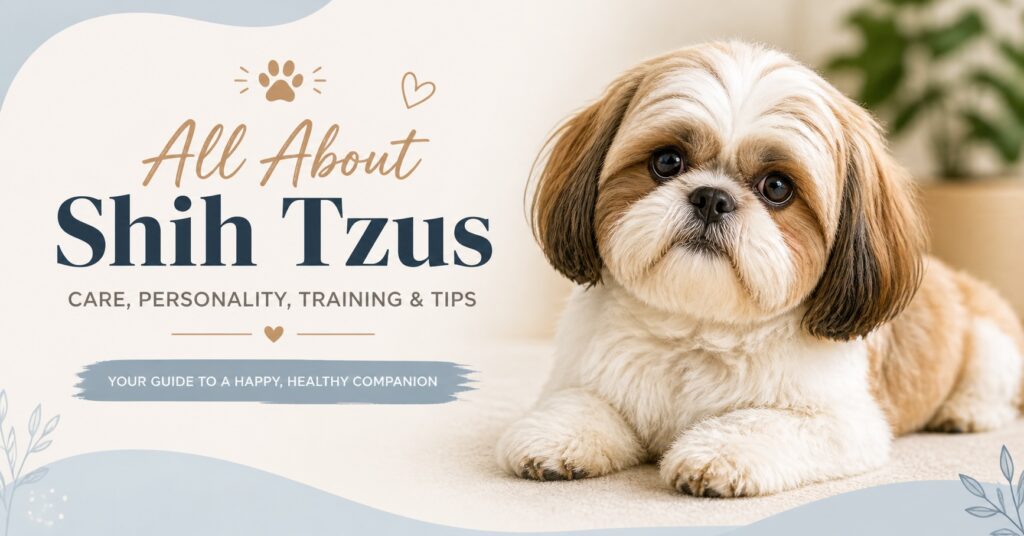
The Shih Tzu is a small dog with a big personality and an even bigger heart. Known for their flowing coats, sweet expressions, and affectionate nature, Shih Tzus have been cherished companion dogs for centuries. Originally bred to live among Chinese royalty, these charming little dogs were designed for one primary purpose — to be loving, loyal companions.
Today, the Shih Tzu remains one of the world’s most popular toy breeds thanks to its friendly temperament, adaptable nature, and ability to thrive in a variety of households. Whether curled up on the couch or greeting visitors with enthusiasm, Shih Tzus bring warmth, companionship, and joy wherever they go. In this comprehensive guide, you’ll learn everything you need to know about the breed, including health concerns, grooming needs, training, nutrition, and expert care tips to help your Shih Tzu live a long and happy life.
Breed Traits & Characteristics
The Shih Tzu is a compact toy breed typically weighing between 9–16 pounds and standing around 8–11 inches tall. They are easily recognized by their long, luxurious double coat, short muzzle, large dark eyes, and adorable underbite.
Their coat comes in a wide variety of colors and patterns, including:
- Gold and white
- Black and white
- Liver
- Brindle
- Solid black
- Tri-color combinations
Despite their elegant appearance, Shih Tzus are sturdy little dogs with confident and affectionate personalities.
Breed History
The Shih Tzu’s origins date back over 1,000 years to ancient China and Tibet. The breed was developed as a royal companion dog for Chinese emperors and was highly prized within imperial palaces.
The name “Shih Tzu” means “Lion Dog,” inspired by traditional Chinese art depicting lions. These dogs were treasured for their companionship, beauty, and affectionate demeanor. For centuries, they remained largely exclusive to royalty before eventually becoming popular worldwide as beloved household pets.
Personality & Temperament
Shih Tzus are affectionate, friendly, outgoing, and deeply people-oriented. They thrive on attention and companionship and are happiest when close to their family members.
Key personality traits include:
- Gentle and loving nature
- Playfulness
- Social confidence
- Adaptability
- Affection toward strangers and other pets
Although generally easygoing, Shih Tzus can occasionally display stubbornness, particularly during training. Their charming personality and loving disposition make them ideal companion dogs.
Family Life
The Shih Tzu is an excellent family pet and adapts well to many lifestyles, including apartment living and smaller homes. They typically get along well with children, seniors, and other pets when properly socialized.
Because they are companion-oriented dogs, Shih Tzus prefer being with their people rather than spending long periods alone. Their affectionate and gentle temperament makes them especially popular among families looking for a low-to-moderate energy companion.
Caring for the Breed
Shih Tzus require regular grooming, attention to eye and skin health, and consistent preventive care. Due to their flat-faced (brachycephalic) structure, they can be sensitive to heat and humidity.
Owners should:
- Keep them cool during warm weather
- Maintain regular grooming routines
- Schedule routine veterinary wellness visits
- Monitor for breathing difficulties
Daily companionship and moderate activity help keep Shih Tzus emotionally and physically healthy.
Common Health Issues
Like many small and brachycephalic breeds, Shih Tzus are prone to several health concerns, including:
- Brachycephalic Airway Syndrome
- Dental disease
- Eye problems (dry eye, corneal ulcers, cataracts)
- Ear infections
- Patellar luxation
- Intervertebral disc disease (IVDD)
- Allergies and skin conditions
Preventive veterinary care and early intervention are essential for maintaining long-term health and comfort.
Grooming Tips
The Shih Tzu’s beautiful coat requires regular maintenance. Daily brushing is recommended for dogs with long coats to prevent mats and tangles. Many owners choose a shorter “puppy cut” for easier upkeep.
Additional grooming needs include:
- Cleaning around the eyes to prevent staining
- Regular ear cleaning
- Nail trimming every few weeks
- Frequent dental care
- Routine bathing with gentle dog shampoo
Professional grooming every 4–8 weeks is common for this breed.
Exercise & Activity Levels
Shih Tzus have relatively moderate exercise needs. Short daily walks and indoor play sessions are usually enough to keep them happy and healthy.
Because of their short muzzle, avoid strenuous activity and overheating, particularly during warm weather. They enjoy companionship-based activities more than intense athletic exercise.
Training Nutrition Tips
Training
Shih Tzus are intelligent but can be independent-minded. Positive reinforcement training with treats, praise, and consistency works best. Early socialization and gentle structure help build confidence and good manners.
House-training may require extra patience due to their small size and occasional stubbornness.
Nutrition Tips
Feed a high-quality, portion-controlled diet designed for small breeds. Lean protein, healthy fats, and omega-3 fatty acids support coat, skin, and joint health.
Because Shih Tzus are prone to dental disease and weight gain, avoid excessive treats and schedule regular dental care. Fresh water should always be available.
Is the Breed Right for You?
The Shih Tzu is ideal for individuals or families seeking a loving, affectionate, and adaptable companion dog. They do well in apartments, smaller homes, and households where someone is home frequently.
However, prospective owners should be prepared for:
- Ongoing grooming requirements
- Regular eye and dental care
- Sensitivity to heat
- Strong desire for companionship
If you’re looking for a sweet, devoted lap dog with a charming personality, the Shih Tzu may be a perfect fit.
Conclusion: Trust Dr. Carol Osborne With Your Shih Tzu’s Health
At Chagrin Falls Veterinary Center & Pet Clinic, Dr. Carol Osborne provides personalized care tailored to the unique needs of small companion breeds like the Shih Tzu. By combining traditional veterinary medicine with holistic and preventive wellness strategies, Dr. Carol helps support respiratory health, skin and coat wellness, dental care, nutrition, and long-term vitality.
Whether your Shih Tzu needs preventive screenings, nutritional guidance, allergy management, or advanced medical care, Dr. Carol and her team are committed to helping your beloved companion enjoy a healthier, happier life.
FAQ – Shih Tzu Dog Breed
Are Shih Tzus good family dogs?
Yes. Shih Tzus are affectionate, gentle, and friendly companion dogs that typically do well with families, seniors, and children. Their adaptable nature makes them excellent pets for apartments and smaller homes.
Do Shih Tzus bark a lot?
Shih Tzus are generally moderate barkers. They may bark to alert their owners to visitors or unfamiliar sounds, but proper training and socialization can help prevent excessive barking.
How much exercise does a Shih Tzu need?
Most Shih Tzus need about 20–40 minutes of light-to-moderate daily exercise. Short walks and indoor play sessions are usually enough to keep them healthy and happy.
Are Shih Tzus hypoallergenic?
Shih Tzus are often considered a low-shedding breed, which may make them easier for some allergy sufferers to tolerate. However, no dog is completely hypoallergenic.
How often should a Shih Tzu be groomed?
Shih Tzus require regular grooming to maintain their coat and prevent tangles. Daily brushing is recommended for long coats, along with professional grooming every 4–8 weeks.
What health problems are common in Shih Tzus?
Common health concerns include brachycephalic airway syndrome, dental disease, eye problems, ear infections, allergies, and patellar luxation. Routine veterinary care helps detect and manage these conditions early.
Are Shih Tzus easy to train?
Shih Tzus are intelligent but can sometimes be stubborn. Positive reinforcement, patience, and consistency are key to successful training. Early socialization and gentle structure help encourage good behavior.
What is the best diet for a Shih Tzu?
A high-quality, portion-controlled diet formulated for small breeds is ideal. Balanced protein, healthy fats, and nutrients that support skin, coat, and dental health are especially beneficial for Shih Tzus.
Can Shih Tzus be left alone during the day?
Shih Tzus are highly companion-oriented dogs and may become anxious if left alone for long periods regularly. They do best in homes where they receive frequent interaction and companionship.
How long do Shih Tzus usually live?
With proper care, many Shih Tzus live between 10–16 years. Preventive veterinary care, good nutrition, weight management, and dental health all contribute to longevity.