
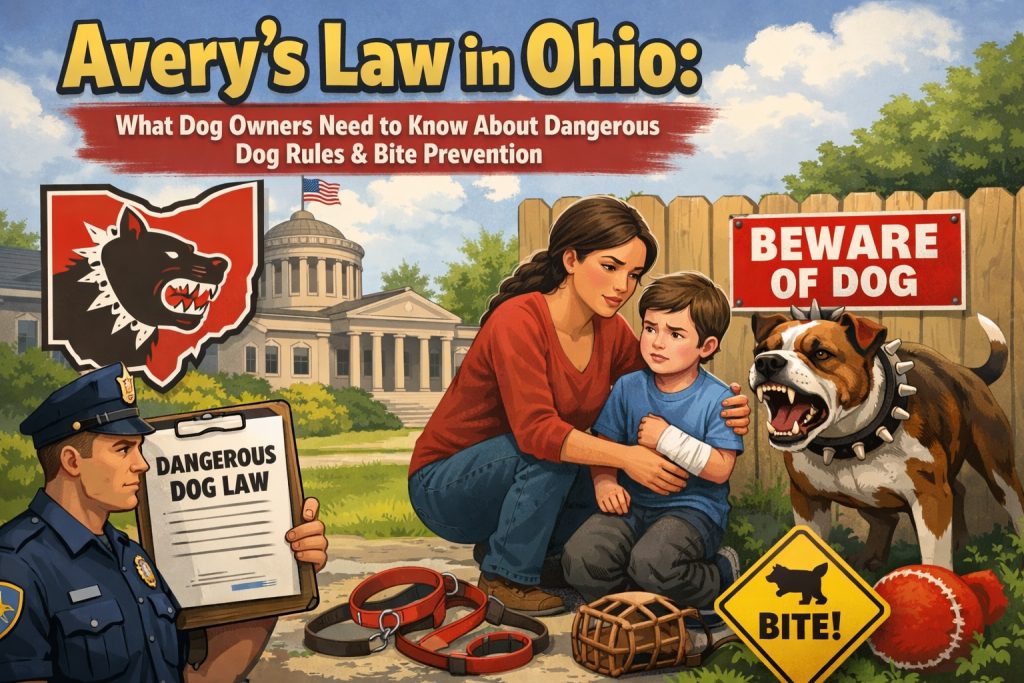
Dog ownership comes with incredible joy, companionship, and unconditional love—but it also carries responsibility. In response to several serious dog attack incidents, the state of Ohio has taken a stronger stance on public safety by introducing Avery’s Law, a legislative update designed to protect communities while promoting responsible pet ownership.
For many dog owners, this law may sound intimidating at first. But the truth is, Avery’s Law is not about punishing good pet parents—it’s about preventing avoidable tragedies and ensuring that dogs are properly managed, trained, and cared for.
In this guide, we’ll break down exactly what Avery’s Law means, why it was created, and how you can protect both your dog and your family—without stress or confusion.
⚖️ Why Avery’s Law Was Created
Avery’s Law was introduced following a series of severe and, in some cases, fatal dog attacks. These heartbreaking events highlighted gaps in existing laws and enforcement, particularly around identifying dangerous dogs and holding owners accountable.
The goal of the law is simple:
👉 Prevent serious attacks before they happen
👉 Ensure accountability when they do
👉 Create clearer standards for enforcement
Rather than targeting all dogs, the law focuses specifically on serious, unprovoked attacks and repeated dangerous behavior. It aims to strike a balance between protecting the public and treating animals fairly.
🚨 Key Changes Under Avery’s Law
Avery’s Law introduces several important updates that every dog owner should understand. These changes clarify responsibilities, increase consequences, and provide authorities with more immediate control in dangerous situations.
🐕 Stricter Consequences for Severe Attacks
Under the updated law, if a dog seriously injures or kills a person in an unprovoked attack, the consequences are much more severe.
In these extreme cases:
- The dog may be humanely euthanized
- Legal consequences for the owner can be significant
It’s important to note that:
👉 This does NOT apply to minor bites
👉 It also does NOT apply to defensive behavior, such as a dog protecting itself or its owner
The law is designed to address clear, severe threats, not normal dog behavior.
🚔 Immediate Impoundment Powers
Previously, there could be delays in removing a potentially dangerous dog after an incident. Avery’s Law changes that.
Now:
- Animal control officers can immediately impound a dog involved in a serious attack
- This helps prevent further harm while investigations take place
This provision is focused on public safety first, ensuring that dangerous situations are contained quickly.
👤 Increased Owner Responsibility
One of the biggest shifts under Avery’s Law is the emphasis on owner accountability.
Dog owners are now clearly responsible for preventing their pets from:
- Roaming freely without supervision
- Acting aggressively toward people or other animals
- Being placed in situations where harm could occur
Failing to properly manage your dog—such as allowing it off-leash in public or neglecting behavioral issues—can now lead to criminal charges in certain situations.
This reinforces an important truth:
👉 A well-trained, well-managed dog starts with a responsible owner
💰 Mandatory Liability Insurance
If a dog is officially classified as “dangerous” or “vicious,” the owner must now carry at least:
➡️ $100,000 in liability insurance
This requirement ensures that:
- Victims of attacks have financial protection
- Owners take extra precautions when managing higher-risk dogs
While this won’t affect most pet owners, it is a critical rule for those whose dogs have demonstrated concerning behavior.
📖 Clearer Legal Definitions
Another major improvement is the clarification of key terms, including:
- Dangerous dog
- Vicious dog
- Serious injury
Why does this matter?
Because clearer definitions mean:
✔️ More consistent enforcement
✔️ Fewer misunderstandings
✔️ Fairer outcomes for both owners and animals
This helps ensure that the law is applied based on facts—not assumptions or fear.
🏡 What This Means for Everyday Dog Owners
If you’re a responsible dog owner with a well-behaved pet, Avery’s Law likely won’t change your day-to-day life at all.
However, it does serve as a powerful reminder of best practices that every dog owner should follow.
🦮 Keep Your Dog Leashed in Public
Even the friendliest dog can become unpredictable in unfamiliar environments. A leash:
- Keeps your dog safe
- Prevents unwanted interactions
- Protects you legally
🏠 Secure Your Home Environment
At home, make sure your dog cannot:
- Escape your yard
- Access strangers unexpectedly
Secure fencing and supervised outdoor time are essential—not optional.
🧠 Invest in Training & Socialization
A well-socialized dog is far less likely to react aggressively.
Focus on:
- Early training
- Positive reinforcement
- Exposure to people and environments
If your dog shows signs of fear or reactivity, addressing it early can prevent escalation.
⚠️ Don’t Ignore Warning Signs
Growling, snapping, or excessive fear are not behaviors to brush off.
These are signals that your dog may be:
- Anxious
- Overstimulated
- Feeling threatened
Working with a qualified trainer or veterinarian can make a huge difference.
🩺 How Dr. Carol Can Help Support Your Dog
Behavioral issues don’t appear overnight—and they rarely resolve on their own.
That’s where expert guidance becomes invaluable.
Dr. Carol Osborne, an integrative veterinarian, takes a whole-health approach to behavior, looking beyond symptoms to identify underlying causes such as:
- Stress and anxiety
- Nutritional imbalances
- Hormonal factors
- Environmental triggers
Early intervention is key. Whether your dog is showing mild reactivity or more concerning behavior, getting support sooner rather than later can:
✔️ Prevent escalation
✔️ Improve your dog’s quality of life
✔️ Protect your family and community
If you’re ever unsure, it’s always better to ask early than react late.
❤️ The Bigger Picture: Safety, Responsibility & Compassion
Avery’s Law is not about fear—it’s about awareness.
It reminds us that:
- Dogs depend on us for guidance and structure
- Prevention is always better than punishment
- Responsible ownership protects everyone
Most importantly, it reinforces that dogs are not the problem—lack of management is.
With proper care, training, and attention, the vast majority of dogs will never pose a danger to anyone.
🐾 Final Thoughts
Avery’s Law brings clarity and accountability to situations where both have been needed for a long time. While it introduces stricter consequences for severe cases, it also empowers responsible dog owners with clear guidelines to follow.
At the end of the day, this law is about creating safer communities—without taking away the joy of dog ownership.
So keep doing the right things:
🐶 Train with patience
🐶 Supervise with care
🐶 Act early when something feels off
Because a safe dog is a happy dog—and a happy dog means a happy home.
❓ FAQ: Avery’s Law & Dog Bites
1. Does Avery’s Law apply to all dog bites?
No. The law focuses on serious, unprovoked attacks. Minor bites or defensive behavior are generally not subject to the harshest penalties.
2. What happens if a dog is labeled dangerous?
The owner may be required to:
Carry $100,000 liability insurance
Follow stricter containment rules
Ensure the dog does not pose further risk
3. Can my dog be taken away immediately after an incident?
Yes. If a serious attack occurs, animal control can impound the dog immediately while the situation is evaluated.
4. Will this affect normal dog owners?
For most responsible pet owners, nothing changes—just continue practicing good ownership habits.
5. What should I do if my dog shows aggressive behavior?
Don’t wait. Consult a veterinarian or canine behavior expert early. Early intervention can prevent serious problems later.