
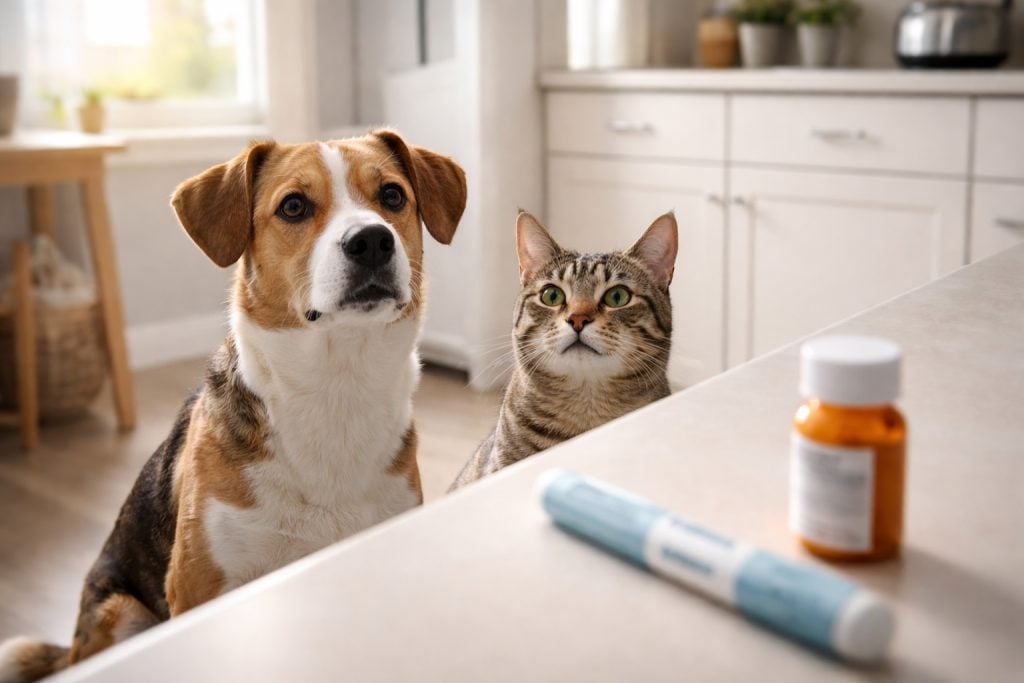
Glucagon-like peptide-1 (GLP-1) medications—such as Ozempic, Wegovy, and Mounjaro—are becoming increasingly common in households around the world. Prescribed for diabetes management and weight loss, these medications have helped millions of people improve their health.
However, as GLP-1 drugs become more widely used, veterinarians and poison control centers are seeing a growing concern: accidental exposure in pets.
While these medications can be life-changing for humans, they can pose serious risks to dogs and cats if they ingest them, chew on injection pens, or receive an accidental dose.
Pet owners should understand what GLP-1 medications are, why they can be dangerous to animals, what symptoms to watch for, and how to prevent exposure.
What Are GLP-1 Medications?
GLP-1 drugs mimic a natural hormone called glucagon-like peptide-1, which helps regulate several metabolic functions in the body.
In humans, these medications are commonly prescribed for:
- Type 2 diabetes management
- Weight loss and obesity treatment
- Cardiovascular risk reduction
GLP-1 medications work by:
- Slowing gastric emptying
- Increasing insulin release
- Reducing glucagon levels
- Suppressing appetite
Many GLP-1 medications are long-acting, with some injections lasting up to a full week per dose. Because of their potency, even small amounts can affect animals.
Why Are GLP-1 Medications Dangerous for Pets?
Animals metabolize medications very differently than humans. Even tiny doses of GLP-1 drugs can cause exaggerated physiological responses in pets.
Veterinary experts have raised concerns about a growing trend sometimes referred to as “Ozempets” or “Ozempups,” where owners consider using human weight-loss medications for animals.
This practice can lead to serious complications.
As more households store injectable pens or oral tablets, accidental exposure has increased. Reports from the ASPCA indicate a growing number of calls related to pets accessing GLP-1 medications.
GLP-1 drugs can affect multiple organ systems in pets, including:
- Pancreas
- Digestive system
- Kidneys
- Brain
Because of these systemic effects, unintended exposure can quickly become a medical emergency.
Signs of GLP-1 Exposure in Dogs and Cats
The most common symptoms involve the digestive system.
Gastrointestinal symptoms
- Persistent vomiting
- Diarrhea
- Abdominal pain
- Loss of appetite
Metabolic symptoms
- Lethargy
- Weakness
- Low blood sugar (hypoglycemia)
- Dehydration from vomiting or diarrhea
Severe complications (less common)
- Acute kidney injury
- Pancreatitis
- Electrolyte imbalances
If a pet develops these symptoms and there is a possibility they accessed GLP-1 medication, veterinary care should be sought immediately.
Are GLP-1 Medications Ever Safe for Pets?
Research into GLP-1 therapies for animals is ongoing. Scientists are currently exploring potential veterinary applications for obesity and metabolic disease.
For example, an experimental GLP-1 implant for cats known as MEOW-1 is being studied as a possible treatment for feline obesity.
While early studies show promise, these experimental therapies are not the same as giving pets human medications.
Human GLP-1 drugs should never be administered to pets unless specifically prescribed and supervised by a veterinarian.
What to Do If Your Pet Is Exposed to a GLP-1 Medication
If you suspect your dog or cat has ingested, chewed, or received a GLP-1 medication:
- Contact your veterinarian or an emergency animal hospital immediately.
- Call a pet poison hotline such as the ASPCA Animal Poison Control Center.
- Do not induce vomiting unless instructed by a professional.
- Bring the medication packaging so veterinary staff can identify the drug and dosage.
Most cases require monitoring, but early treatment significantly improves outcomes.
How to Prevent Accidental Exposure
Because GLP-1 medications are now widely used in many households, prevention is essential.
Pet owners should take simple safety steps:
- Store injectable pens and tablets in closed cabinets or drawers.
- Never leave medication on countertops, nightstands, or in purses.
- Dispose of used injection pens safely.
- Administer injections away from curious pets.
These precautions can significantly reduce the risk of accidental exposure.
Frequently Asked Questions (FAQ)
Can Ozempic or other GLP-1 drugs harm dogs and cats?
Yes. Medications such as Ozempic, Wegovy, and Mounjaro can cause vomiting, weakness, dehydration, and potentially serious complications if pets ingest them or receive an accidental dose.
What should I do if my pet chews a GLP-1 injection pen?
Contact your veterinarian or an emergency animal clinic immediately. Bring the medication packaging so the veterinary team can determine the drug and potential exposure level.
Are GLP-1 medications approved for pets?
Currently, human GLP-1 medications are not approved for use in pets. Veterinary researchers are studying specialized formulations for animals, but they are not widely available yet.
What symptoms might a pet show after exposure?
Pets may experience vomiting, diarrhea, abdominal pain, lethargy, low blood sugar, or dehydration. Severe cases can lead to pancreatitis or kidney complications.
How can I protect my pets from medication exposure?
Store medications securely, keep them out of reach, dispose of injection pens properly, and administer medications away from pets.
The Bottom Line
GLP-1 medications offer powerful benefits for human health, but they can pose significant risks for pets. As these medications become more common in households, awareness and safe storage are critical.
If you believe your pet may have been exposed to a GLP-1 medication, seek veterinary care immediately. Early intervention can make a significant difference in recovery and long-term health.
Protect Your Pet’s Health
If you suspect your dog or cat may have been exposed to a GLP-1 medication like Ozempic, Wegovy, or Mounjaro, immediate veterinary care is essential. Early intervention can prevent serious complications.
At Chagrin Falls Veterinary Center & Pet Clinic, our team provides both traditional and integrative veterinary care to help pets recover quickly and maintain long-term health.
👉 If your pet is showing symptoms or you have concerns about medication exposure, don’t wait. Seek veterinary guidance right away.