
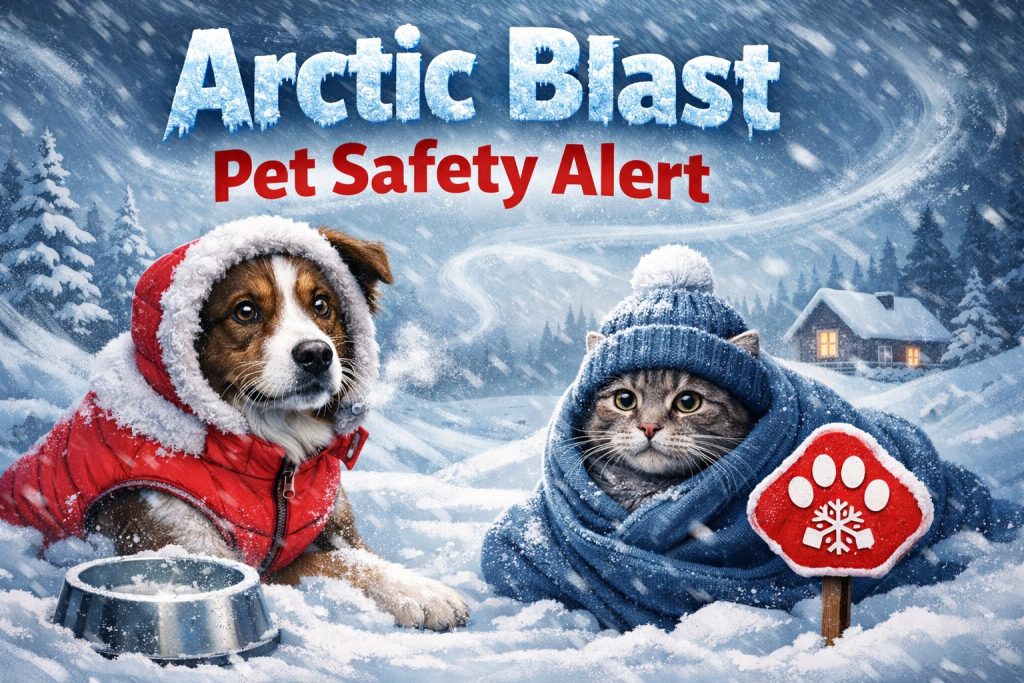
As temperatures drop, remember that pets tolerate cold differently. Coat thickness, body fat, activity level, and overall health all play a role. Keep these essential winter safety tips in mind to help protect your pets during the colder months.
Know Your Pet’s Limits
Senior pets, those with arthritis, and short-haired breeds are especially vulnerable to cold weather. Short-legged pets face added risk because their bellies are closer to snow and ice. Pets with medical conditions such as diabetes or heart disease may also have difficulty regulating body temperature. If you’re unsure how much cold your pet can safely handle, check with your veterinarian.
Indoor Pet Safety
During freezing weather, pets should stay indoors. No pet—regardless of breed—should be left outside for extended periods. Inside the home, provide a warm, draft-free sleeping area. If you use space heaters, keep them well out of reach to prevent burns or fire hazards.
Winter Walks & Cold-Weather Gear
- Shorten walks: Limit time outdoors during extreme cold.
- Dress appropriately: Use sweaters or coats for short-haired dogs and keep them dry.
- Protect paws: Check for cracks, redness, or ice buildup. Trim fur between toes to prevent ice balls, and consider properly fitted booties.
- Clean up after walks: Wipe paws and bellies thoroughly to remove toxic de-icers, salt, and antifreeze residue.
Outdoor Winter Hazards
- Vehicle safety: Outdoor cats often seek warmth under car hoods. Tap the hood or honk before starting your engine.
- Cold cars: Never leave pets unattended in vehicles during winter—cars can become dangerously cold very quickly.
- Ice danger: Avoid frozen lakes, ponds, or rivers; ice may not support you or your pet.
Identification & Prevention
Snow can hide familiar scents, making it easier for pets to become lost. Make sure collars, ID tags, and microchip information are current. Store antifreeze and de-icing products securely—just a small amount can be deadly if ingested.
Watch for Signs of Frostbite or Cold Stress
If your pet shows signs such as shivering, whining, anxiety, weakness, or slow movement, contact your veterinarian immediately.
Winter Pet Safety FAQ
How cold is too cold for pets?
Cold tolerance varies by breed, coat thickness, body fat, age, and overall health. Small, short-haired, elderly, and sick pets are more sensitive to cold and should spend minimal time outdoors during freezing temperatures.
Should pets stay indoors during winter?
Yes. Pets should remain indoors during freezing weather. No pet should be left outside for extended periods, regardless of breed or coat type.
Do dogs need coats or sweaters in winter?
Short-haired dogs, senior dogs, and small breeds often benefit from sweaters or coats in cold weather. Clothing should fit properly and stay dry to be effective.
How can I protect my pet’s paws in winter?
Check paws after walks for cracks, redness, or ice buildup. Trim fur between toes to prevent ice balls and consider well-fitting booties for added protection.
Are de-icers and antifreeze dangerous to pets?
Yes. Many de-icers and antifreeze products are toxic and can be fatal if ingested. Always wipe your pet’s paws and belly after walks and store chemicals securely out of reach.
Is it safe to leave pets in cars during winter?
No. Cars can quickly become dangerously cold in winter, acting like refrigerators. Never leave a pet unattended in a vehicle during cold weather.
Why should I tap my car hood before driving in winter?
Outdoor cats may seek warmth under car hoods or near engines. Tapping the hood or honking the horn can alert them before you start the vehicle.
Can pets walk on frozen lakes or ponds?
No. Ice may appear solid but can be dangerously thin. Pets can easily fall through and become trapped in freezing water.
How can I prevent my pet from getting lost in snow?
Snow can hide familiar scents, making it easier for pets to wander off. Ensure your pet wears a collar with up-to-date ID tags and has current microchip information.
What are signs of frostbite or cold stress in pets?
Warning signs include shivering, whining, anxiety, weakness, slow movement, or reluctance to walk. Contact your veterinarian immediately if you notice these symptoms.
Dr. Carol Osborne, DVM
Dr. Carol Osborne, DVM, is a practicing integrative veterinarian and a nationally recognized leader, speaker, educator, and advocate in the field of functional medicine. She is the founder and director of the Chagrin Falls Veterinary Center and Pet Clinic and an Emmy-nominated television journalist. Her first two books, Naturally Healthy Dogs and Naturally Healthy Cats hit the international best-seller lists. She is a regular contributor to several television shows and networks including FOX & Friends, The Today Show, Discovery’s Animal Planet, and Good Day LA.Dr. Carol is board-certified in Anti-Aging Medicine and developed and patented PAAWS: Pet Anti-Aging Wellness System for dogs and cats. Today she has turned her passion for functional pet medicine, real food, nutrition, and wellness into activism. Dr. Osborne is leading a pet health revolution that challenges us to reimagine our pet’s biology and the process of aging to create and sustain your pet’s health for life. Learn more at http://www.chagrinfallspetclinic.com