
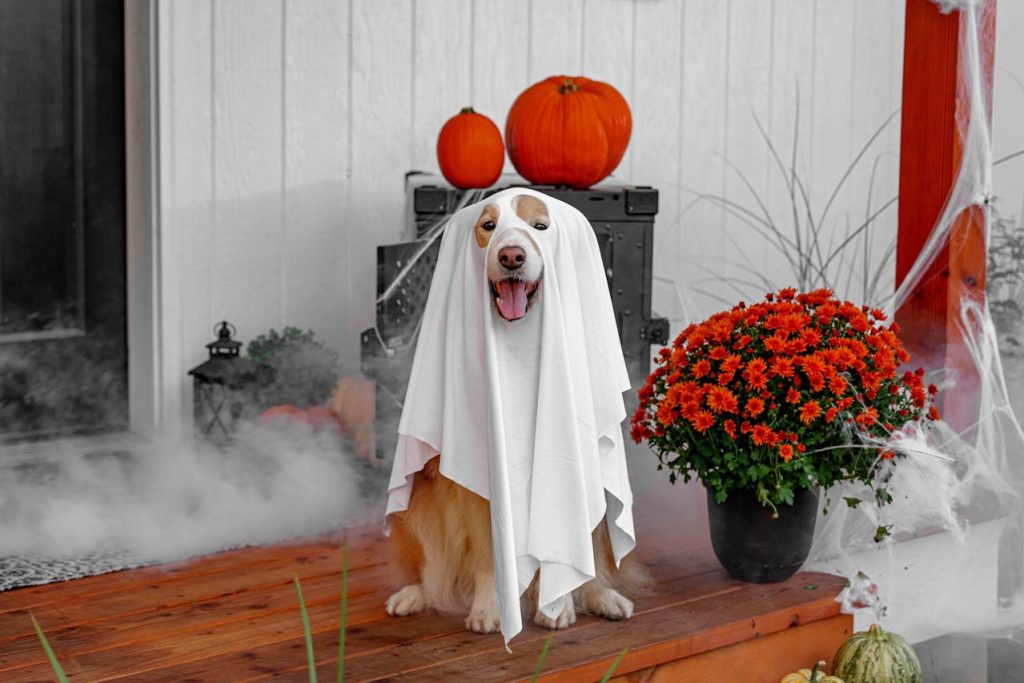
Halloween is full of fun and excitement for families—but for dogs and cats, it can be stressful and even dangerous. Between constant doorbell rings, strange costumes, loud noises, and tempting candy, it’s easy for pets to feel overwhelmed.
At Chagrin Falls Veterinary Center & Pet Clinic, Dr. Carol Osborne and our team have gathered the best Halloween safety tips from our previous articles to help ensure your furry friend enjoys a safe, calm, and happy Halloween night.
🏡 1. Create a Safe & Quiet Space
Give your pet a peaceful retreat away from the action:
- Choose a quiet room away from the front door or busy hallways.
- Add familiar comforts — their bed, toys, and a blanket with your scent.
- Use soft background noise (music or TV) to drown out doorbells and chatter.
- Stick to their normal feeding and walk schedule for stability.
- Try calming aids like pheromone diffusers or weighted anxiety wraps (e.g., ThunderShirt).
🐶 Tip: Keep trick-or-treating activities outside or in a different part of the house if possible.
🍬 2. Beware of Candy & Treat Hazards
Halloween candy is one of the top reasons for emergency vet visits this time of year.
Keep these away from pets at all times:
- Chocolate (toxic to dogs and cats)
- Sugar-free candies containing xylitol
- Raisins or grapes (can cause kidney failure)
- Macadamia nuts, lollipop sticks, and wrappers (choking or obstruction risk)
Store candy in closed containers and high cabinets, and remind children never to share sweets with pets. Dispose of wrappers promptly.
🕯️ 3. Decorate with Pet Safety in Mind
Festive décor can create hidden dangers.
- Replace open-flame candles with LED candles to prevent burns or fire.
- Keep electric cords and string lights out of reach.
- Avoid fake cobwebs or small decorative items that can be swallowed.
- Glow sticks and novelty jewelry contain chemicals that can irritate your pet’s mouth and skin.
- Don’t let pets chew on carved pumpkins — stems, mold, or wax residue may be harmful.
🎃 Dr. Carol’s Tip: Stick with battery candles inside pumpkins for the same glow, zero risk!
👻 4. Costumes, Trick-or-Treating & Door Traffic
We love seeing pets in costumes—but safety comes first.
- Ensure the costume fits properly and allows easy movement, breathing, and visibility.
- Avoid tight elastics, dangling parts, or masks covering eyes and ears.
- Never leave a dressed pet unsupervised.
- Keep pets indoors during trick-or-treat hours if they’re easily frightened.
- Place a gate or barrier near the front door to prevent escapes when opening for trick-or-treaters.
🚪 Frequent door openings = high escape risk. Keep collars and microchips updated just in case!
🐕🦺 5. Dogs vs. Cats: Tailored Tips
For Dogs:
- Walk dogs before dusk to avoid the busiest hours.
- Use a reflective leash or light-up collar.
- Keep them leashed at all times—no matter how well trained.
For Cats:
- Keep cats indoors for the evening.
- Create cozy hiding spots with blankets or boxes.
- Be extra careful with black cats, as Halloween superstitions sometimes put them at risk.
🆔 6. Identification & Emergency Prep
Even calm pets may bolt when startled by noise or costumes.
✅ Make sure:
- ID tags are legible and secure.
- Microchip information is up-to-date.
- You know your vet’s emergency phone number and the nearest 24-hour clinic.
If your pet ingests chocolate, xylitol, or any questionable treat — call your vet immediately.
🧡 7. Quick Halloween Pet Safety Checklist
| ✅ | Pet-Friendly Safety Steps |
|---|---|
| 🏠 | Prepare a quiet, secure room for your pet. |
| 🚪 | Limit door access during trick-or-treating. |
| 🍫 | Store candy out of reach (chocolate = toxic). |
| 🔌 | Keep wires, cords, and candles away from pets. |
| 🐕 | Walk dogs early, keep cats indoors. |
| 🧣 | Ensure pet costumes are safe and comfortable. |
| 📛 | Check ID tags & microchip registration. |
| 📞 | Save your emergency vet contact info. |
Halloween Treats That Are Safe for Pets
Not all Halloween snacks have to be off-limits! You can make the night fun and festive for your furry friend with pet-safe treats. Healthy options include plain pumpkin purée, carrot sticks, apple slices (without seeds), and unsalted, cooked chicken or turkey bites. Many pets also enjoy frozen banana slices or homemade treats made with oat flour and peanut butter (make sure it’s xylitol-free!). These wholesome snacks let your pets feel included in the celebration—without the risks that come with candy or chocolate.
🎃 A Brief History of Halloween in the USA
Halloween’s origins trace back over 2,000 years to the ancient Celtic festival of Samhain (pronounced “sow-in”), a time when people lit bonfires and wore costumes to ward off wandering spirits. When Irish and Scottish immigrants brought these traditions to America in the 1800s, the holiday evolved into a uniquely American celebration.
By the early 20th century, communities began organizing neighborhood parties, costume parades, and trick-or-treating as a safe way for children to enjoy the night. Today, Halloween has become one of the nation’s favorite festivities—marked by creativity, community spirit, and family fun.
But as the decorations, doorbells, and candy piles have grown, so too have the potential hazards for pets. That’s why it’s important to celebrate with safety in mind—for every family member, including the furry ones!
FAQs
Q1. What are some essential steps to keep pets safe during Halloween? Ensure your pets have proper identification, create a quiet safe space away from the front door, keep harmful items like chocolate and decorations out of reach, and consider moving candy distribution outdoors to prevent escapes.
Q2. How can I reduce my pet’s anxiety on Halloween night? Create a calm environment by setting up a quiet room with familiar bedding and toys, use calming aids like pheromone diffusers or soft music, and consider having someone stay with your pet during peak trick-or-treating hours.
Q3. What Halloween treats are dangerous for pets? Chocolate, especially dark and baking varieties, and sugar-free candies containing xylitol are extremely toxic to pets. Keep these out of reach, along with candy wrappers that can cause intestinal blockages if swallowed.
Q4. How can I prevent my pet from escaping during trick-or-treat activities? Use baby gates or barriers near the front door, consider distributing candy outdoors, and ensure your pet’s identification (collar tags and microchip) is up-to-date in case they do manage to slip out.
Q5. Are Halloween decorations safe for pets? Many common decorations can be hazardous. Avoid using real candles, secure electrical cords, and keep items like artificial spider webs and small decorations out of your pet’s reach to prevent ingestion or entanglement.
🎃 Conclusion
Halloween can be a howling good time—as long as we take a few precautions for our pets. With proper planning, you can ensure your dog or cat enjoys the festivities safely and stress-free. At Chagrin Falls Veterinary Center & Pet Clinic, we want Halloween to be fun for every member of your household—including your four-legged companions. With a little planning and awareness, you can protect your pets from the stress and hazards that often accompany the season. Whether it’s keeping candy out of reach, creating a safe zone, or ensuring your pet’s ID is up-to-date, these steps can make the difference between a night of spook-tacular fun and one of unnecessary vet visits.
Wishing you a safe, happy and pet-friendly Halloween from Dr. Carol Osborne and everyone at the clinic! 🎃🐾
From Dr. Carol Osborne and the caring team at Chagrin Falls Veterinary Center & Pet Clinic, we wish you and your furry friends a fun, safe, and spook-tacular Halloween! 👻🐾
🐾 About Dr. Carol Osborne
Dr. Carol Osborne, DVM, is an integrative veterinarian and the founder of Chagrin Falls Veterinary Center & Pet Clinic, offering conventional, holistic, and natural care for dogs and cats. Learn more at ChagrinFallsPetClinic.com.