
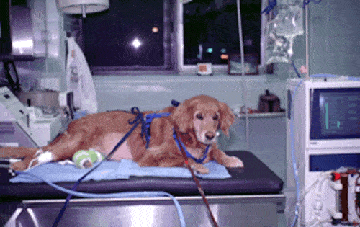
Kidney Therapy. The kidneys serve many vital functions. They filter and remove toxic wastes from the body via the urine, regulate calcium and vitamin D levels, maintain fluid levels, and secrete the hormone responsible for red blood cell production. Anything that interferes with the kidneys’ ability to function properly can cause kidney disease, which is the second only to cancer as a leading cause of death in dogs. In most cases, progressive age-related deterioration is responsible, with no apparent cause. Other causes of kidney disease include bacterial and viral infections, nutritional factors, immune system defects, toxins, and inherited breed disorders.
“Acute” kidney disease occurs suddenly, is rare in dogs, and with prompt treatment is generally reversible. Long-term “chronic” kidney disease is also called chronic renal disease and is the most common form in dogs. It is usually the result of slow age-related deterioration of the kidneys.
SIGNS OF KIDNEY FAILURE IN DOGS
- Initially dogs drink and urinate excessively. The urine produced is dilute so dogs become dehydrated and drink a lot to try to replace the lost fluids. No matter how much they drink; they are unable to maintain normal hydration.
- Advanced signs of Kidney Disease include weight loss, vomiting, depression and loss of appetite. Signs are not apparent until 80 percent of kidney function is already lost.
- Routine diagnostics include blood and urine tests as well as abdominal x-rays. A kidney biopsy is generally necessary to confirm the exact cause. In most cases, a biopsy is not obtained and treatment is symptomatic.
WHAT DOG OWNERS CAN DO WITH THEIR VET
- Fluid therapy is the single most important factor in the treatment of kidney disease. The kidneys normally function to maintain fluid levels by concentrating the urine. With kidney disease, excess fluids are lost into the urine so dehydration is a major problem.
- Good nutrition is also critical. The goal is to decrease the workload on the kidneys by decreasing the amount of waste the kidneys must eliminate. Excess dietary protein, phosphorus, and salt create a lot of waste, diets should therefore contain small amounts of high-quality proteins, low salt (use salt substitute), and low phosphorus.
- Anemia or a low number of red blood cells is often also a problem with Kidney Disease. Supplementing the diet with B-vitamins and iron stimulates red blood cell production, which helps counteract anemia.
- Today state of the art kidney therapy may include Calcitriol, which is a natural form of vitamin D and is compounded specifically for each dog. Capsules are given by mouth once daily. Calcitriol helps prevent further kidney deterioration, regenerates the kidneys and helps restore normal function. It was given routinely to human dialysis patients.
- In pets, Calcitriol is only effective when the value of the blood calcium multiplied by the blood phosphorus level is less than 40. After 15 years, of successful international clinical trials, it is still considered experimental in pets. So far the results have been excellent for both dogs and cats. Kidney transplants are a treatment option in extreme cases.
- Long-term management involves monitoring kidney functions with blood and urine tests every three to six months. At home hydration can be monitored by pinching the skin on the back of the dog’s neck. Hold it for five seconds, then release. If it takes over five seconds for the skin to return to normal, the dog is dehydrated and fluids are indicated.
- In certain cases, owners may learn to give subcutaneous fluids under the skin at home. Most dogs enjoy a good quality of life for several years.
COMPLEMENTARY THERAPY FOR KIDNEY FAILURE IN DOGS – HERBAL REMEDIES for DOGS WITH CHRONIC KIDNEY DISEASE
- Fish oil is a source of Omega-3 Fatty Acids
- Rhubarb (Rheum Officinale)
- B Vitamins or a multi-vitamin mineral supplement such as PAAWS, a glandular or dietary beef kidney.
- Alfalfa (Medicago sativa) one tablet per 30 pounds of body weight given once daily may help strengthen kidney tissue. Crush and mix with food. Fresh parsley is a diuretic herb which promotes urination and may be useful in certain cases.
- Kidney Essentials is a natural herbal combination of superior plant based phytonutrients that help to maintain and restore normal kidney function
HOMEPATHIC REMEDIES FOR CANINE KIDNEY FAILURE
- Kali chloricum is recommended for long-term kidney disorders. Arsenicum album 30c counteracts vomiting in acute Kidney Disease.
- Silicea 30c helps to slow down degeneration of kidney tissue in long-term cases.
LET’S TALK ABOUT: a Product called Azodyl that is receiving a lot of press and warrants discussion.
Azodyl is an over the counter product made in France and distributed by a company called Vetoquinol for pets. Another company Kilbow Biotics, sells it for people. Azodyl contains just 3 varieties of “good bacteria”, or what we refer to as probiotics, (also found in organic yogurt) specifically E. thermophilus (KB 19), L. acidophilus (KB 27), and B. longum (KB 31), along with some Psyllium husk. There are many excellent probiotic supplements currently available that are much more comprehensive and very cost effective. The Vetoquinol web site suggests that using Azodyl, along with another product,called Epikacin they also make, helps to reduce nitrogenous waste and flush “uremic” toxins from the bodies of dogs and cats with kidney problems, therefore lowering BUN and Creatinine blood levels.
Epikacin, made by the same company, is a very old, Calcium based product, that was used in the past to bind excess phosphorus and help eliminate it from the body, in pets with kidney failure. Unfortunately, excess calcium blood levels are common, along with excess phosphorus levels in many pets, as a result of malfunctioning kidneys. Excess calcium leads to further health problems and as a result this therapy is quite outdated and ineffective. Aluminum hydroxide (ALOH) is currently recommended by Board Certified Veterinary Internists at the University of Davis, veterinary hospital as the product of choice to use in pets to effectively bind and eliminate excess phosphorus from the body. It has replaced Epikacin for this purpose.
The Kidney Dialysis Center at University of Davis in California is top notch, offering state of the art treatment, dialysis and kidney transplants for pets with advanced kidney failure. I had the opportunity to spend some time there last year with a 6 year old Beagle patient named Jenny, a candidate for a kidney transplant. As a practicing holistic veterinarian, with a focus on geriatrics, I have successfully dealt with many older pets with failing kidneys and am always glad to offer my help.