
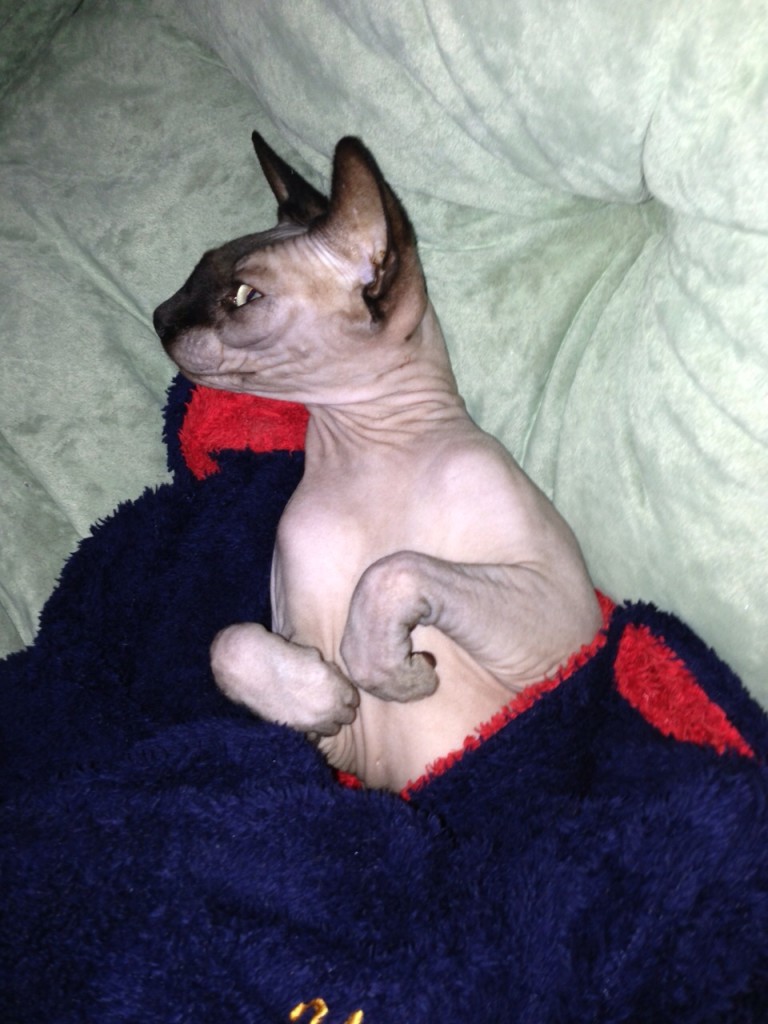
Feline Hair Loss
Alopecia is defined as the absence of hair from areas that are normally hairy. Hair loss may involve thinning of the hair or complete hair loss. Itching may or may not be a factor. Hair loss often occurs on specific areas of the body, like the ears, with ear mites or the face and neck with fleas which helps to determine the underlying problem. The most common cause of hair loss in cats is self induced by itching. Eliminating fleas, inhalant allergies and food allergies cures most of these cases. Hair loss without itching can be due to certain hormonal disorders such as low levels of thyroid hormones. Behavioral disorders can result in hair loss because of excessive over grooming which occurs in Siamese cats.
Feline Alopecia Universalis is a rare inherited disorder specifically created by breeders. Sphynx cats such as the pedigree hairless are an example as is the Canadian Hairless. They are born without any primary hairs. Diagnosis of the underlying problem is based on signs, and lesion location. Blood and urine tests diagnose most hormonal disorders causing hair loss including Thyroid disease. Skin scrapings and tissue biopsies examined microscopically confirm more severe cases.
COMPLEMENTARY THERAPY
* Kelp – 1 Tsp Kelp powder in food daily to stimulate a sluggish thyroid gland but in cases where the exact cause of low thyroid function is not known Kelp can promote further damage to thyroid gland and is contraindicated.
* For hair loss associated with psychological disorders- St. Johns Wort is effective to reduce anxiety
* Chelated Zinc – 5 milligrams daily
* Vitamin C – 250 milligrams 3 times a day
* Omega-3 fatty acids improves health of skin and hair coat – 1/8 Tsp Salmon Oil
* Avoid using Aluminum cooking utensils, cats can be sensitive.